Your cart is empty
Free shipping on all US orders

Free shipping on all orders
Your Cart
Your cart is empty
Free shipping on all US orders
Almost everyone knows about the importance of healthy eating and exercise, but sleep is the often-overlooked third pillar of health. The statistics are sobering: approximately 70% of Americans report poor sleep at least once per month, with 11% experiencing sleep difficulties every single night. Between 50 and 70 million Americans deal with some form of sleep-related disorder.
During sleep, your body repairs damaged tissues, consolidates memories, releases growth hormone, and rebalances neurotransmitter systems. When this process is disrupted night after night, the effects cascade throughout every system in your body.
Not getting enough Z's each night has been linked to:
On average, adults between the ages of 18-64 need 7-9 hours of sleep per night, and older adults 65 years plus need 7-8 hours. But it's not just about quantity—sleep quality matters tremendously.
Healthy sleep cycles through distinct stages: light sleep, deep slow-wave sleep, and REM sleep. Each stage serves different restorative functions. Deep sleep is when physical recovery occurs and growth hormone is released. REM sleep is critical for memory consolidation, emotional processing, and cognitive function.
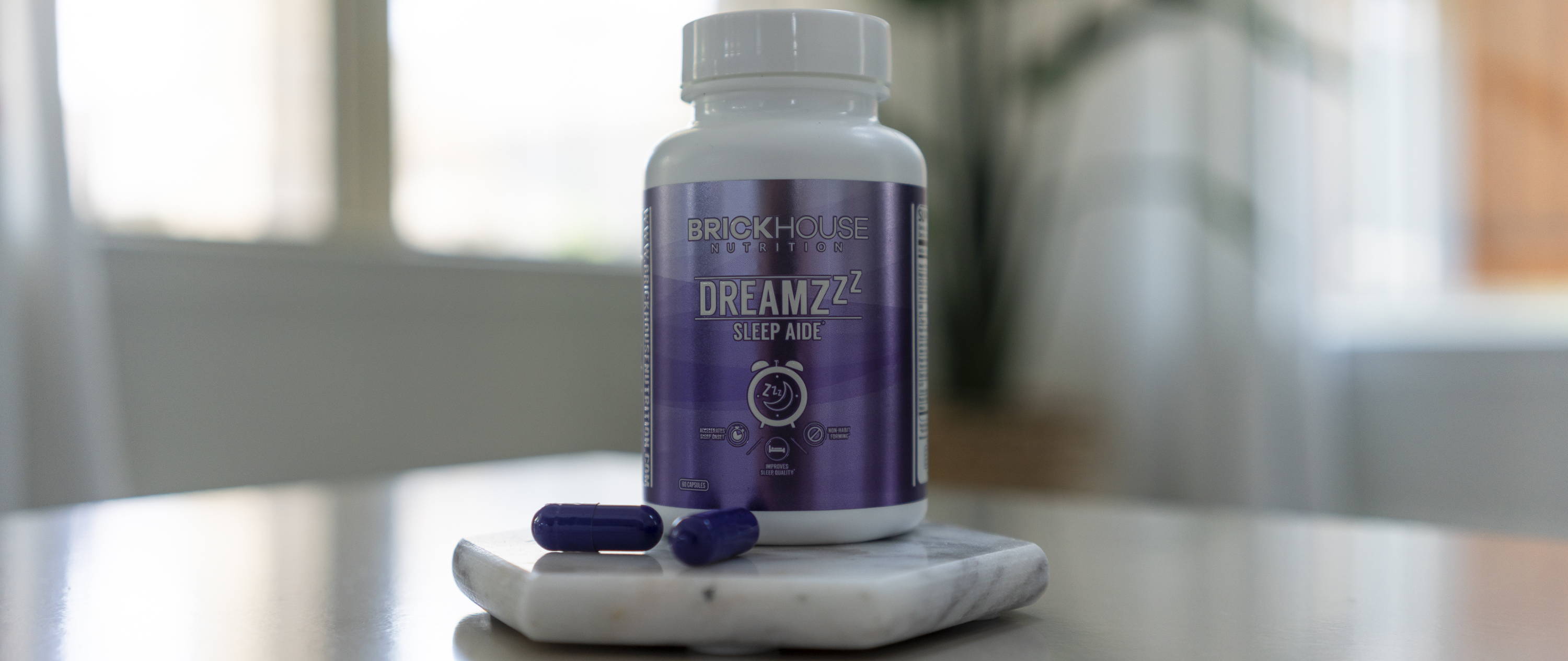
Many sleep aids knock you out but disrupt this natural architecture, leaving you feeling groggy despite spending hours in bed. DreamZzz was formulated differently—to support your body's natural sleep mechanisms rather than override them.
DreamZzz targets multiple sleep pathways simultaneously—the GABA system, serotonin-melatonin pathway, and essential mineral support. Physician formulated with the perfect amount of each ingredient, read below to understand how each contributes to deep, restorative sleep.
Chamomile has been humanity's go-to calming herb for thousands of years, traditionally used as a tea to promote relaxation and restful sleep. The key bioactive compound responsible for these effects is apigenin, a flavonoid that binds to benzodiazepine sites on GABA-A receptors—the same receptors targeted by prescription anti-anxiety medications.
However, unlike synthetic sedatives, apigenin acts as a gentle modulator rather than a heavy-handed agonist. It enhances your brain's natural calming signals without causing sedation, dependency, or cognitive impairment.
What the research shows: A meta-analysis found that chamomile administration significantly improves sleep quality and reduces anxiety symptoms. Research in Frontiers in Nutrition demonstrated that dietary apigenin intake positively correlates with sleep quality in large adult populations.
Key benefits:

GABA is the chief inhibitory neurotransmitter in the central nervous system—think of it as the brake pedal to glutamate's accelerator. When GABA activity is high, neuronal firing decreases, your mind quiets, your muscles relax, and sleep becomes possible.
When you can't sleep because your mind is racing, low GABA activity is often the culprit. Supplemental GABA helps restore the inhibitory tone needed for sleep onset.
What the research shows: Studies demonstrate that GABA supplementation can reduce sleep latency and improve overall sleep quality. Research shows combinations of GABA with other sleep-promoting compounds like 5-HTP produce synergistic effects, reducing sleep onset time more effectively than either ingredient alone.
Key benefits:
L-Theanine is a unique amino acid found almost exclusively in tea leaves (Camellia sinensis). It's the reason green tea can be simultaneously calming and focusing—and why tea doesn't produce the jittery anxiety that coffee often does, despite both containing caffeine.
L-Theanine crosses the blood-brain barrier easily, where it increases alpha brain wave activity (associated with relaxed alertness), boosts GABA and dopamine levels, and—critically for those who've had caffeine during the day—competes with caffeine at adenosine receptors. This means L-theanine can help "take the edge off" residual caffeine stimulation while promoting the calm mental state needed for sleep.
What the research shows: A comprehensive 2025 systematic review and meta-analysis of 19 randomized controlled trials (897 participants) found that L-theanine significantly improves subjective sleep onset latency, reduces daytime dysfunction, and improves overall sleep quality scores. Another systematic review concluded that supplementation with 200–450 mg/day of L-theanine appears to be a safe and effective way to support healthy sleep in adults.
Key benefits:
Hops are one of the main ingredients of one of the world's most popular drinks—beer. But their sleep-promoting effects have nothing to do with alcohol. Hops contain bioactive compounds that enhance GABA-A receptor activity, producing mild sedative effects that complement other GABA-supporting ingredients in DreamZzz.
What the research shows: A notable study found that non-alcoholic beer made from hops improved both the time to fall asleep and subjective feelings of restfulness—confirming that the sleep benefits come from the hops themselves, not alcohol (Franco et al., 2012).
Key benefits:
Lemon balm (Melissa officinalis) is commonly used as a tea to promote cognition and calmness. Unlike other GABA-supporting ingredients that work by binding to receptors, lemon balm contains rosmarinic acid and other compounds that inhibit GABA transaminase—the enzyme that breaks down GABA.
By slowing GABA degradation, lemon balm effectively increases available GABA in the brain, providing another layer of calming support that works through a different mechanism than the other ingredients.
Key benefits:
Passionflower (Passiflora incarnata) is one of the most well-researched botanical sleep aids, with multiple clinical trials demonstrating its effectiveness for insomnia and anxiety. Its benefits come from a complex of flavonoids including vitexin, isovitexin, orientin, and chrysin that modulate the GABA-A receptor complex. The standardization to 3.5% vitexin ensures consistent, reliable potency.
What the research shows: A double-blind, randomized, placebo-controlled study on adults with insomnia found that passionflower significantly increased total sleep time compared to placebo. Another clinical trial demonstrated significant reductions in stress scores and improvements in sleep quality over 30 days. A systematic review of 9 clinical trials found passionflower consistently reduced anxiety and improved sleep without adverse cognitive effects. Passionflower supplementation may also improve neurocognitive abilities, including memory (Kim et al., 2019).
Key benefits:
Ziziphus jujube, jujube, or Korean date is a fruit-bearing plant used in traditional Chinese medicine for a variety of health benefits. It's particularly prized for its calming properties and its ability to "nourish the heart and quiet the spirit."
Jujube contains saponins (particularly jujubosides) that modulate GABAergic and serotonergic neurotransmission. Research suggests jujube works by increasing GABA-A receptor sensitivity and enhancing serotonin activity—bridging the gap between the GABA system and serotonin pathway.
Key benefits:
5-HTP is the immediate precursor to serotonin—the "happy" neurotransmitter that regulates mood, appetite, and sleep. Your body produces melatonin through a specific biochemical pathway: Tryptophan → 5-HTP → Serotonin → Melatonin.
Unlike tryptophan (which must first be converted to 5-HTP), 5-HTP crosses the blood-brain barrier directly and efficiently converts to serotonin in the brain. Serotonin then serves as a precursor to melatonin, supporting both mood regulation and sleep.
What the research shows: A randomized controlled trial found that 5-HTP supplementation improved sleep quality in older adults, with particularly notable benefits for poor sleepers at baseline. Research showed favorable effects on sleep quality components and increased serum serotonin concentration. Studies demonstrate that 5-HTP can increase REM sleep and reduce sleep latency. Combinations of GABA and 5-HTP reduce sleep latency more effectively than either alone.
Key benefits:
Magnesium is involved in over 300 enzymatic reactions in the human body—yet an estimated 50% of Americans don't get enough from their diet. Magnesium bisglycinate is a chelated form where magnesium is bound to two glycine amino acids, offering superior absorption and the added benefit of glycine's own calming effects.
Magnesium plays a direct role in sleep through multiple mechanisms: it regulates GABA receptors, promotes muscle relaxation (essential for physical comfort during sleep), helps regulate the stress hormone cortisol, and supports natural melatonin production.
The glycine component interacts with NMDA receptors in the brain and has been shown to lower core body temperature—a key physiological trigger for sleep onset.
What the research shows: A double-blind, placebo-controlled clinical trial found that magnesium supplementation significantly improved insomnia severity, sleep efficiency, sleep time, and sleep onset latency. The study also found increased serum melatonin and reduced serum cortisol levels. A 2025 randomized controlled trial of 155 adults found that magnesium bisglycinate supplementation modestly improved insomnia severity, with greater improvements in participants with lower baseline dietary magnesium intake.
Key benefits:
Zinc is another essential mineral that plays a surprisingly important role in sleep regulation. It's involved in the synthesis and function of melatonin and appears to modulate GABA receptor activity.
Zinc also supports testosterone production in men—and since low testosterone is associated with poor sleep, maintaining adequate zinc levels helps preserve this important hormonal balance. Combined with magnesium, zinc creates a powerful mineral foundation for restorative sleep.
Key benefits:
Vitamin B6 is essential for metabolism and proper neurotransmission. Though commonly thought of as an "energy" B vitamin, B6 is non-stimulatory and will not keep you awake.
B6 serves as a cofactor for the enzyme that converts 5-HTP to serotonin, and for the enzyme that converts L-DOPA to dopamine. It's also involved in GABA synthesis. Without adequate B6, your body cannot efficiently produce the neurotransmitters needed for healthy sleep.
Key benefits:
Often called velvet bean, mucuna is a tropical legume native to Africa and Asia that has been used in Ayurvedic medicine for thousands of years. The seeds contain L-DOPA (precursor to dopamine) and the seed pods contain serotonin.
While dopamine is often associated with wakefulness, appropriate dopamine levels are essential for sleep quality—dopamine helps regulate the sleep-wake cycle and supports the refreshing, restorative aspects of sleep. Mucuna also has adaptogenic properties that help modulate the stress response.
Key benefits:

Melatonin is the master regulator of your sleep-wake cycle. Produced by the pineal gland in response to darkness, melatonin signals your body to prepare for sleep. It works through MT1 and MT2 receptors in the suprachiasmatic nucleus—your brain's master clock.
Unlike sedatives that force sleep, melatonin works with your natural biology to facilitate the transition from wakefulness to sleep. It's released during environmental darkness and suppressed by light exposure, which is why limiting screen time before bed is so important.
What the research shows: A meta-analysis found melatonin improved time to sleep onset by approximately 40 minutes in people with delayed sleep phase syndrome. Extensive research demonstrates melatonin reduces sleep onset latency, improves sleep quality, and helps restore normal sleep patterns. Melatonin supplementation is very effective for increasing blood levels of melatonin.
Key benefits:
DreamZzz wasn't formulated by simply combining 13 random sleep ingredients. Each component was selected to work synergistically with the others, creating effects greater than the sum of their parts.
The GABA Enhancement Network: Chamomile (apigenin), hops, passionflower (vitexin), lemon balm, and GABA itself all work on the GABA system—but through different mechanisms. Apigenin binds to benzodiazepine sites, passionflower flavonoids modulate GABA-A receptors, lemon balm inhibits GABA breakdown, and supplemental GABA provides direct support. This multi-pathway approach ensures comprehensive GABA support without over-relying on any single mechanism.
The Serotonin-Melatonin Pathway: 5-HTP provides the precursor for serotonin, B6 supplies the enzymatic cofactor needed for conversion, and melatonin provides direct circadian signaling. This complete pathway support ensures your body has everything it needs to produce adequate sleep hormones.
The Mineral Foundation: Magnesium and zinc work together to support enzymatic reactions involved in neurotransmitter production, hormone regulation, and muscle relaxation. Both minerals are commonly deficient in modern diets, making supplementation particularly valuable.
The result is a formula that works with your body's natural sleep mechanisms rather than overriding them—helping you fall asleep faster, sleep deeper, and wake up refreshed.
DreamZzz is an all-natural, non-habit-forming sleep aid designed to help anyone wind down from their day.
Clinically-validated ingredients, such as GABA, help to induce a night of deep and restful sleep by directly stalling the body's natural "wake up!" mechanisms. Apigenin, from Chamomile, and Hops complement GABA by enhancing binding to the sleep receptors in the brain, assisting in the maintenance of a normal circadian rhythm, and reducing anxiety. L-theanine is a unique amino acid known to promote relaxation and take the edge off of stimulants, like caffeine, that are used earlier in the day to get you going while 5-HTP and melatonin work along the serotonin pathway to enhance sedation.
DreamZzz is the ultimate nutritional supplement to get you to sleep fast, improve nightly recuperation, and get you ready for the next day.
1. Bulman, A., D'Cunha, N. M., Marx, W., Turner, M., McKune, A., & Naumovski, N. (2025). The effects of L-theanine consumption on sleep outcomes: A systematic review and meta-analysis. Sleep Medicine Reviews, 81, 102076. https://pubmed.ncbi.nlm.nih.gov/40056718/
2. Lee, J., Jung, H. Y., Lee, S. I., Choi, J. H., & Kim, S. G. (2020). Effects of Passiflora incarnata Linnaeus on polysomnographic sleep parameters in subjects with insomnia disorder: A double-blind randomized placebo-controlled study. International Clinical Psychopharmacology, 35(1), 29-35. https://pubmed.ncbi.nlm.nih.gov/31714321/
3. Abbasi, B., Kimiagar, M., Sadeghniiat, K., Shirazi, M. M., Hedayati, M., & Rashidkhani, B. (2012). The effect of magnesium supplementation on primary insomnia in elderly: A double-blind placebo-controlled clinical trial. Journal of Research in Medical Sciences, 17(12), 1161-1169. https://pubmed.ncbi.nlm.nih.gov/23853635/
4. Ferracioli-Oda, E., Qawasmi, A., & Bloch, M. H. (2013). Meta-analysis: Melatonin for the treatment of primary sleep disorders. PLoS ONE, 8(5), e63773. https://pubmed.ncbi.nlm.nih.gov/23691095/
5. Sutanto, C. N., Xia, X., Heng, C. W., Tan, Y. S., Lee, D. P. S., Fam, J., & Kim, J. E. (2024). The impact of 5-hydroxytryptophan supplementation on sleep quality and gut microbiota composition in older adults: A randomized controlled trial. Clinical Nutrition, 43(3), 593-602. https://pubmed.ncbi.nlm.nih.gov/38309227/
*These statements have not been evaluated by the Food and Drug Administration. This product is not intended to diagnose, treat, cure, or prevent any disease.
BrickHouse Nutrition's Essential Amino Acids Science
Read more about Essential Amino Acids ScienceThe Collagen That Finally Does It All Not all collagen is created equal. The type, source, molecular size, composition, and manufact...
Read more about Radiance Collagen Science
© 2026 BrickHouse Nutrition, llc. All rights reserved.