Your cart is empty
Free shipping on all US orders

Free shipping on all orders
Your Cart
Your cart is empty
Free shipping on all US orders
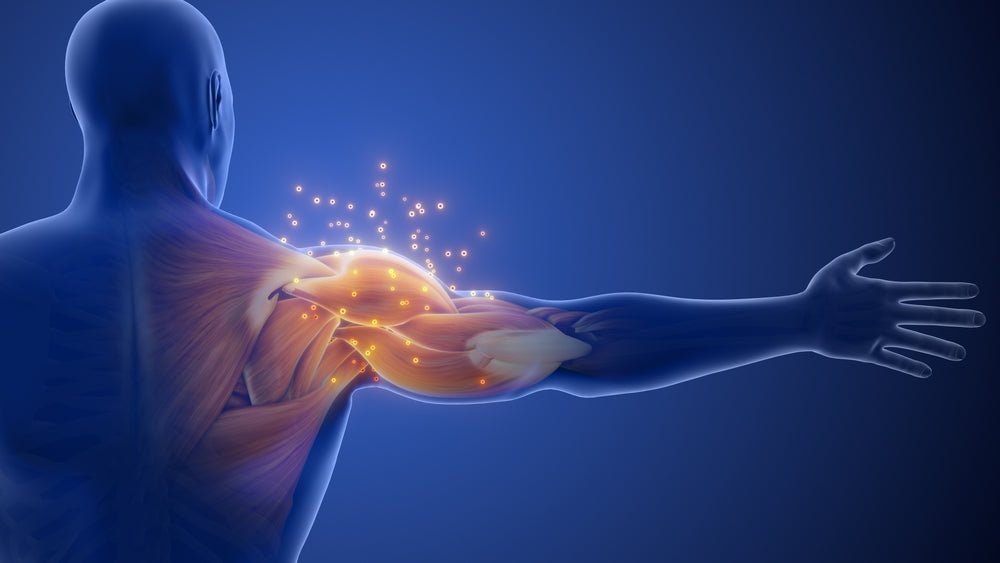
For decades, we viewed skeletal muscle as nothing more than the body's mechanical engine—contractile tissue designed to move bones, lift objects, and propel us through space.
The science was settled, or so we thought. Then came a discovery that fundamentally rewrote our understanding of human physiology- skeletal muscle is the largest endocrine organ in the human body.
This isn't hyperbole. When researchers began analyzing the proteins secreted by contracting muscle fibers, they discovered something extraordinary. Muscle tissue produces, expresses, and releases hundreds of signaling molecules, now collectively termed myokines, which exert profound effects not just locally, but on virtually every organ system in the body.
These muscle-derived factors act through autocrine (affecting the muscle itself), paracrine (affecting nearby tissues), and endocrine (traveling through the bloodstream to distant organs) mechanisms.
The implications are staggering. Your muscles aren't just passive tissue waiting to be told what to do—they're an active endocrine factory producing anti-inflammatory compounds, metabolic regulators, and even molecules that protect your brain from neurodegeneration.
This explains something epidemiologists have observed for years: physically active individuals have dramatically lower rates of type 2 diabetes, cardiovascular disease, cancer, dementia, and depression.

However, supporting this internal endocrine optimization requires more than just showing up to the gym. The myokine response depends on adequate micronutrient status—antioxidants help manage the oxidative stress of training, while vitamins and minerals serve as cofactors for the signaling cascades these molecules initiate.
A foundational greens supplement like Field of Greens provides the broad-spectrum phytonutrient coverage that ensures your endocrine machinery has the raw materials it needs.
Interleukin-6 (IL-6) was the first molecule officially classified as a myokine, and it remains the most extensively studied. What makes IL-6 fascinating is its apparent dual nature.
When chronically elevated from adipose tissue in obese individuals, IL-6 associates with inflammation and insulin resistance. But when released acutely from contracting muscle, it triggers an entirely different cascade of beneficial metabolic effects.

During exercise, muscle-derived IL-6 acts as what researchers call an "energy sensor." When muscle glycogen drops, IL-6 secretion increases exponentially—sometimes reaching 100-fold elevations during prolonged exercise.
This IL-6 then enhances glucose uptake by stimulating GLUT4 translocation to the cell membrane, activates AMPK to promote fat oxidation, and signals the liver to increase glucose output to fuel ongoing activity.
The action extends to the pancreas, where IL-6 increases glucagon-like peptide-1 (GLP-1) secretion from intestinal L cells and pancreatic alpha cells—the same pathway targeted by pharmaceutical GLP-1 agonists.
This improves beta-cell insulin secretion and enhances glucose tolerance. Regular training actually increases IL-6 receptor expression in muscle while decreasing baseline IL-6 levels, creating enhanced sensitivity to this metabolic signal.
Discovered in 2012, irisin captured the imagination of the scientific community as a potential "exercise in a pill." This myokine is cleaved from a membrane protein called FNDC5, which is upregulated during exercise through a pathway that also controls the synthesis of new mitochondria. When muscles contract, FNDC5 is cleaved and irisin is released into circulation.
Irisin's primary claim to fame is its ability to promote the "browning" of white adipose tissue—converting metabolically inactive fat storage depots into beige fat cells that actively burn calories through thermogenesis. But the longevity implications go far deeper.
Research has linked irisin to activation to autophagy pathways—the same molecular mechanisms associated with caloric restriction and lifespan extension. Studies have found that telomere length is positively correlated with irisin plasma levels, suggesting this myokine may directly influence cellular aging.
Perhaps most intriguingly, centenarians show higher irisin levels than younger adults, hinting at irisin's role in exceptional longevity.
Irisin also crosses the blood-brain barrier, where it increases expression of brain-derived neurotrophic factor (BDNF). This provides an explanation for why exercise improves memory, attention, and neuroplasticity—and why physical activity reduces dementia risk.
BDNF deserves special attention in the myokine discussion because it represents the molecular bridge between muscle contraction and brain health. While BDNF is expressed in skeletal muscle and works locally to enhance AMPK activation and lipid oxidation, its most profound effects occur in the central nervous system.
Physical activity consistently increases circulating BDNF levels, and this neurotrophin is critical for neuroplasticity, learning, and memory formation. Exercise-induced BDNF expression in the hippocampus—triggered through the muscle-brain axis—helps explain why regular physical activity decreases the risk of dementia and appears to play a role in treating neurodegenerative diseases like Alzheimer's and Parkinson's.

The catch is that BDNF production and the consolidation of exercise's cognitive benefits depend heavily on sleep quality. During deep sleep, the brain processes the neuroplastic changes initiated during waking exercise, and BDNF signaling continues during restorative sleep phases. Poor sleep essentially short-circuits this process. Supporting quality sleep with a non-habit-forming formula like DreamZzz—which combines GABA, apigenin from chamomile, and other clinically-validated ingredients—ensures the cognitive benefits of your training actually take hold.
Myostatin is the body's natural brake on muscle growth and development. Animals lacking myostatin exhibit massive muscle hypertrophy (think of gorillas), which is why understanding myostatin regulation has enormous implications for combating sarcopenia and maintaining functional strength with age.
Resistance training reduces myostatin expression in both muscle tissue and circulation. But the myokine story gets more interesting with decorin—a small leucine-rich molecule released from contracting muscle fibers that directly binds to and inhibits myostatin in a zinc-dependent manner.
When decorin binds myostatin, it unleashes a hypertrophic gene program. The net effect: enhanced muscle protein synthesis and reduced muscle breakdown—exactly what you want for building and preserving lean mass.
Three lesser-known myokines deserve attention for their powerful effects on body composition and metabolism.
BAIBA is unusual because it's not a protein - it's a small molecule your muscles release during exercise. BAIBA tells your white fat cells to start acting more like calorie-burning brown fat, and it also improves how your liver handles insulin.

FGF21 helps regulate blood sugar and fat metabolism while promoting the same fat-browning effect as BAIBA. It's one of several myokines that improve metabolic flexibility - your body's ability to efficiently switch between burning carbs and burning fat.
IL-15 might be the most exciting of all: it simultaneously builds muscle AND reduces fat. IL-15 essentially tells your body to shuttle nutrients toward muscle tissue and away from fat storage - the holy grail of body recomposition.
These myokines explain why resistance training improves body composition even when the scale doesn't budge - you're changing what your body does with the calories you eat.
Supporting these natural fat-burning pathways with a formula like Lean - which targets metabolism through multiple pathways, including ingredients that support fat browning - can help amplify what your muscles are already doing.
All exercise releases myokines, but resistance training produces a unique signature that favors muscle growth and anti-aging effects. The secret lies in something called PGC-1α4 - a specific protein variant that's activated by lifting weights, not by cardio.
This resistance-specific pathway drives the release of decorin, local growth factors, and other myokines that build lean mass. The mechanical tension of lifting - challenging your muscles against progressively heavier weight - is the primary trigger. This is why consistent progressive overload matters so much: it's not just about getting stronger, it's about maintaining the stimulus that keeps your myokine response robust.
Both single workouts and long-term training affect myokine release. One session triggers immediate secretion, but consistent training over months changes your baseline - your muscles become more sensitive and responsive to the myokine signals.
Volume matters. More total work generally produces greater myokine responses. Frequency matters too - consistent training maintains elevated myokine sensitivity, while taking too much time off quickly reverses these gains. Research shows that myostatin (the muscle-limiting factor) starts increasing within just days of stopping training, triggering rapid muscle loss.
The message is clear: consistency beats perfection. Showing up regularly matters more than having the perfect program.
To maximize your training stimulus, your muscles need adequate energy. Foundation combines creatine with PEAK ATP® to support muscle power, training capacity, and recovery - helping you generate the tension that triggers optimal myokine release.
The flip side of the myokine story is sobering. Physical inactivity isn't just "not exercising" - it's an independent health risk. Without regular muscle contractions, you lose the protective myokines that keep inflammation in check, maintain insulin sensitivity, and protect your brain.
Researchers call this the "diseasome of physical inactivity" - a cluster of conditions, including belly fat accumulation, chronic inflammation, insulin resistance, and cognitive decline that all stem from disrupted myokine signaling. Even just two weeks of reduced activity leads to measurable decreases in how your body handles blood sugar.
The connection between exercise and brain health is now rock solid. Regular physical activity reduces dementia risk, slows cognitive aging, and even helps treat depression and anxiety. Myokines are the molecular messengers that make this happen.
Irisin and other myokines cross the blood-brain barrier and directly stimulate the growth of new brain cells in the hippocampus - the memory center. This provides a biological basis for prescribing exercise as medicine for mental health, not just physical health.
Your muscles and fat tissue are in constant communication. When you exercise, myokines like irisin, BAIBA, and IL-15 tell your fat cells to become more metabolically active - burning calories instead of just storing them.

This communication explains why fit people handle calories differently than sedentary people, even when eating similar amounts. Their muscles are sending different instructions to their fat tissue.
Keeping this communication active throughout the day means staying consistently active - not just crushing it at the gym and then sitting for eight hours. Dawn to Dusk provides extended-release energy that supports all-day activity without the spike-and-crash that kills afternoon motivation.
For anyone worried about bone health, the myokine story offers good news. Irisin directly increases bone density and strength. Decorin, IL-15, and several other exercise-induced factors also support bone formation.
Meanwhile, myostatin - the muscle-limiting factor that resistance training suppresses - actually harms bone growth. So every time you lift weights, you're not just building muscle - you're sending pro-bone signals while blocking anti-bone signals. For osteoporosis prevention, resistance training may be the single best thing you can do.
To maximize your myokine response, prioritize big compound movements - squats, deadlifts, presses, rows. These exercises work more muscle mass and generate stronger signals than isolation exercises like bicep curls.
Keep challenging yourself. Progressive overload - systematically increasing weight, reps, or training density over time - maintains the stimulus that keeps your myokine response strong. When training gets too easy, the signals diminish.
Don't skip cardio entirely. While resistance training triggers the hypertrophy-focused myokines, aerobic exercise contributes complementary signals. A well-rounded program covers more of the myokine spectrum.
Your myokine system runs on fuel and raw materials. Protein provides the building blocks for the muscle growth that decorin and IGF-1 are signaling for. Without adequate amino acids, those growth signals have nothing to work with.
Micronutrients matter too. Zinc is specifically required for decorin to bind and block myostatin. B-vitamins support energy metabolism. Antioxidants from colorful fruits and vegetables help manage training stress. A comprehensive greens formula like Field of Greens delivers whole-food nutrition rather than isolated synthetic vitamins.
Sleep is when the magic happens. Growth hormone release, muscle repair, and the brain benefits from BDNF all depend on quality sleep. Chronic sleep deprivation disrupts insulin sensitivity and blocks the muscle-brain connection that makes exercise so powerful for cognition.
And don’t forget about stress management. While acute stress during training is fine, chronic life stress elevates cortisol in ways that undermine your myokine signaling. And watch out for overtraining - pushing too hard for too long impairs immune function and likely blunts your myokine response. Strategic deload weeks aren't laziness; they're part of smart programming.
The myokines have fundamentally changed how we understand exercise. Your muscles are sophisticated hormone factories that communicate with your brain, liver, fat cells, bones, and immune system every time they contract.
These muscle-derived messengers - IL-6, irisin, BDNF, decorin, BAIBA, FGF21, IL-15, and hundreds of others - explain why exercise protects against chronic disease, preserves brain function, improves body composition, and may even extend how long you live. Every time you lift, you're dispensing anti-aging compounds throughout your body.
So, the next time you think of skipping that workout, just remember all the benefits you’re likely missing out on- we know you don’t want to miss out on them!
The Hidden Calorie Furnace: How NEAT Burns More Than Your Gym Session Ever Could
You just crushed a brutal 45-minute workout session. Sweat dripping, heart pounding, you glance at your fitness tracker: 400 calories burned. Not bad, right? You've earned that post-workout protein...
Read more about The Hidden Calorie Furnace: How NEAT Burns More Than Your Gym Session Ever CouldFadogia Agrestis for Men: What the Research Says About This Testosterone-Supporting Herb
There's a small, unassuming shrub growing in the Nigerian countryside that's been quietly used by local communities for hundreds of years. That shrub is Fadogia agrestis, and it's making waves in t...
Read more about Fadogia Agrestis for Men: What the Research Says About This Testosterone-Supporting Herb
© 2026 BrickHouse Nutrition, llc. All rights reserved.