Your cart is empty
Free shipping on all US orders

Free shipping on all orders
Your Cart
Your cart is empty
Free shipping on all US orders
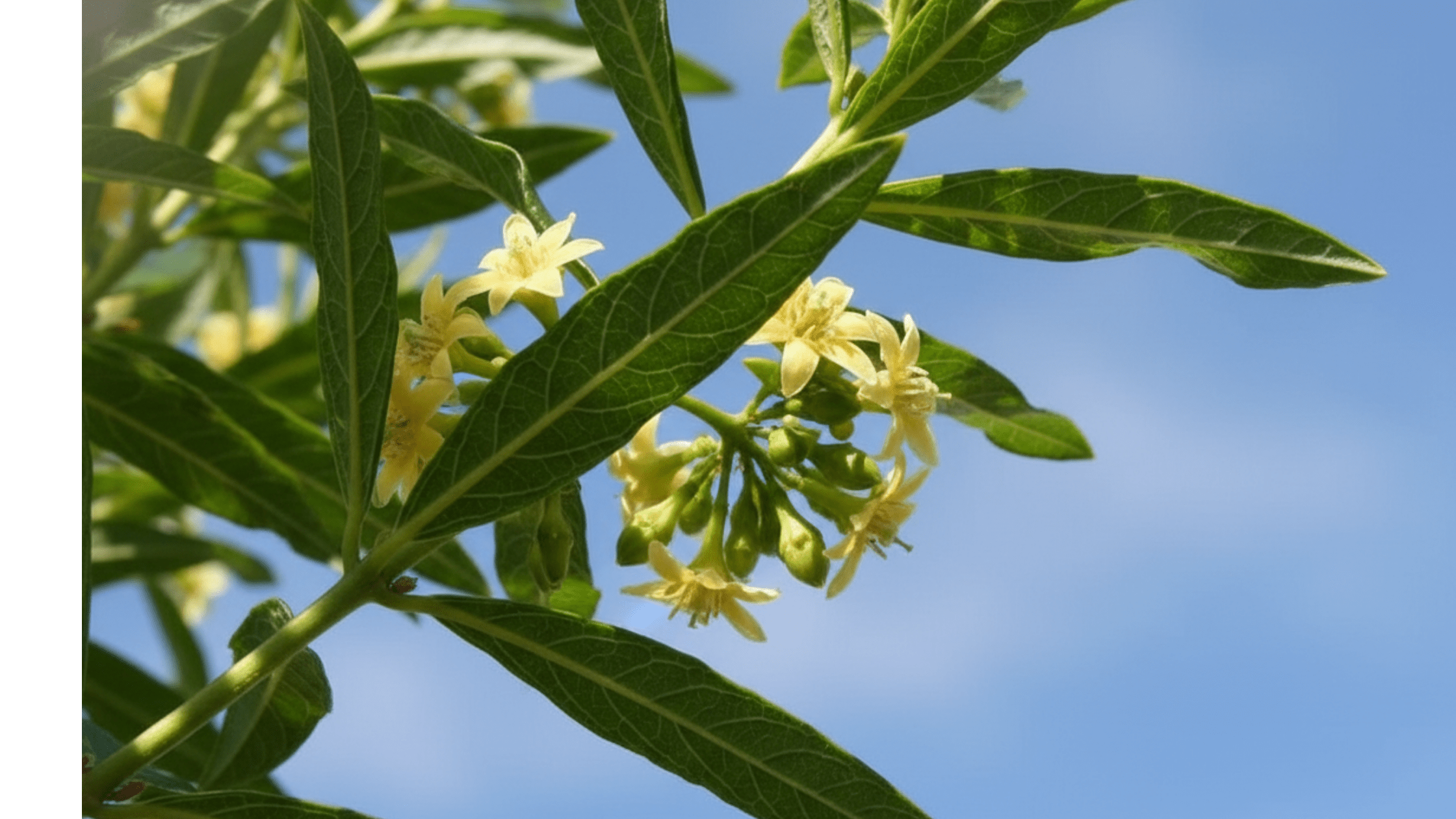
There's a small, unassuming shrub growing in the Nigerian countryside that's been quietly used by local communities for hundreds of years. That shrub is Fadogia agrestis, and it's making waves in the fitness and supplement world for reasons that go far beyond its traditional use as a bedroom enhancer.
If you've been paying attention to health podcasts, fitness forums, or supplement discussions over the past few years, you've probably heard Fadogia mentioned alongside other testosterone-supporting ingredients.
But here's what makes this one different: while many so-called "T-boosters" work through vague mechanisms that are hard to pin down, Fadogia appears to work by targeting a very specific part of your body's hormone production system.
In this blog, we're going to break down what Fadogia agrestis actually is, how it works in your body, and how it can help you reach your goals. Ready? Let’s hop to it.
Fadogia agrestis is a flowering shrub that grows mainly in West Africa, particularly in Nigeria, but also in neighboring countries like Cameroon, Angola, and Zambia. It's a member of the Rubiaceae family (the same plant family that includes coffee, if you're curious). The plant itself isn't much to look at—it grows about one to three feet tall with woody stems, small oval-shaped leaves, and little yellow flowers.
But the real action happens in the stem. That's the part of the plant that contains the highest concentration of the active compounds that researchers believe are responsible for its effects.
This is why, when you're looking at Fadogia supplements, you want to see "stem extract" on the label—not leaf, not root, but stem. Products that don't specify which part of the plant they use should raise a red flag (and yes, we use stem extract in Force)

In traditional Nigerian medicine, Fadogia has been used for a long list of purposes. The most well-known use? As a natural aphrodisiac to boost libido and sexual performance. Local healers observed that men who used the plant seemed to have increased sexual desire and improved performance in the bedroom. But that wasn't all—they also used it to help with fevers, to combat malaria, to address general fatigue, and as what they'd call a "vitality tonic"—basically, something to help people feel more energetic and alive.
Think about it: when a plant has been used for the same purpose across multiple communities for hundreds of years, that's not random. There's usually something going on at a biological level. Traditional medicine systems may not use the language of modern science, but they represent generations of observation and trial-and-error. And that's exactly what scientists wanted to figure out—what is it about this unassuming shrub that produces these effects?
When researchers started analyzing Fadogia agrestis in the lab, they found several types of natural compounds that could explain its effects.
The two heavy hitters are saponins and alkaloids. These are the compounds that most researchers believe are doing the real work when it comes to Fadogia's effects on testosterone.

Saponins are natural compounds found in many plants. Their main ability is to interact with cell membranes and influence how cells communicate with each other, including how they respond to hormonal signals.
The saponins in Fadogia are thought to be the main drivers of its testosterone-boosting effects. They appear to stimulate the release of luteinizing hormone from the pituitary gland, which in turn signals the testes to produce more testosterone.
Alkaloids are another class of compounds, and they're known for having powerful biological effects. Some of the most potent compounds in nature are alkaloids. Coffee's caffeine is an alkaloid. So is the nicotine in tobacco. Morphine from poppies is an alkaloid.
These compounds tend to have strong effects on the body because they can interact directly with receptors and signaling pathways. The alkaloids in Fadogia—including specific ones that researchers have named fadoginines A and B—appear to play a role in the plant's hormonal effects as well.
The plant also contains smaller amounts of other beneficial compounds. Flavonoids are present in low concentrations, and these provide antioxidant benefits—helping protect cells from damage caused by free radicals. This could be relevant for recovery from intense exercise, which generates a lot of oxidative stress. Anthraquinones are also present in small amounts.
And glycosides—compounds that combine a sugar molecule with another molecule—have been found as well, including monoterpene glycosides that may contribute to the plant's effects.
Interestingly, some research has also found that Fadogia has notable anti-inflammatory and pain-relieving properties, which may be related to its alkaloid and saponin content. In some animal studies, the plant showed pain-relieving effects comparable to aspirin. This could be beneficial for athletes and active individuals dealing with inflammation from training.
Alright, here's where things get interesting. To understand how Fadogia works, you first need to understand how your body produces testosterone in the first place. Don't worry—we'll keep this simple.
Your body has what we call the hypothalamic-pituitary-gonadal axis, or HPGA (or HPTA) for short. That's just a fancy way of describing the communication system between your brain and your testes. Think of it like a chain of command in a company, where instructions flow from the top executives down to the workers on the factory floor.

Here's how it works: the hypothalamus (like the CEO) sends a signal to your pituitary gland (like middle management). This signal is a hormone called GnRH—gonadotropin-releasing hormone.
The pituitary gland then releases two hormones into your bloodstream: luteinizing hormone (LH) and follicle-stimulating hormone (FSH). These are like work orders sent to the factory.
When LH reaches your testes (the factory), it tells specialized Leydig cells to start producing testosterone. The more LH that arrives, and the better those cells respond to it, the more testosterone gets produced.
This is where Fadogia comes in. Based on the research we have so far, Fadogia appears to work in two ways:
First, it seems to increase the release of LH from your pituitary gland. In other words, it helps your brain send more "order forms" for testosterone. More orders going out means more testosterone potentially being produced.
Second, it may increase how sensitive the LH receptors are on your Leydig cells. This means your testes become more responsive to those order forms—they fill the orders more efficiently. It's like upgrading your factory workers so they can process more orders in the same amount of time.
This two-pronged approach—more orders being placed AND better response to those orders—could explain why the effects seen in research studies have been pretty notable. You're essentially optimizing both sides of the production equation.
Now, what does the research actually show? The most frequently cited study comes from researchers led by Yakubu, published in 2005 in the Asian Journal of Andrology. They gave male rats different doses of Fadogia agrestis stem extract and measured their testosterone levels over five days. The results were impressive:
At the lowest dose tested (18 mg per kg of body weight), testosterone levels roughly doubled compared to the control group. At a medium dose (50 mg/kg), they tripled. At the highest dose (100 mg/kg), they increased about sixfold. The increases were dose-dependent, meaning the more Fadogia the rats received, the higher their testosterone went.
A follow-up study by the same research team looked at what happened after 28 days of continuous supplementation. They found that the rats showed an 11-15% increase in testicular weight—suggesting the Fadogia was actually stimulating testicular function and development, not just temporarily spiking hormone levels. The researchers attributed these effects primarily to the saponin content of the plant.
Now, here's the important limitation that we need to be upfront about: these are animal studies. Rats aren't humans, and we can't automatically assume that what works in rodents will work the same way in people. Doses that work in rats don't translate directly to human doses. The scientific community is still waiting for well-designed human clinical trials to confirm these effects.
That said, the mechanism makes biological sense—the HPG axis works similarly in humans and rats. And the traditional use of this plant over hundreds of years, with consistent reports of increased vitality and sexual function, suggests there's something real going on here. We just need more human data to know for sure how well it translates.
Before we move on, there's another piece of the testosterone puzzle worth understanding: the difference between "total" testosterone and "free" testosterone. This is something a lot of guys miss when they get their blood work done, and it matters quite a bit.
When testosterone enters your bloodstream, not all of it is available to actually do its job. A protein called Sex Hormone-Binding Globulin (SHBG) grabs onto a lot of it and holds it in place.

Testosterone that's bound to SHBG can't enter your cells and can't produce effects like building muscle, increasing energy, or boosting libido. It's like having money in a bank account that's frozen—technically, it's yours, but you can't use it.
Only "free" testosterone—the portion that isn't bound to SHBG—is actually available to work in your body. This typically represents only about 2-3% of your total testosterone. The rest is either bound to SHBG (about 40-50%) or loosely bound to another protein called albumin (about 50-60%). The albumin-bound testosterone can become available fairly easily, but SHBG-bound testosterone is essentially locked up.
This is why two guys could have the same total testosterone level but feel completely different. If one has a lot of his testosterone bound up by SHBG while the other has more of it free, the second guy is going to experience more of testosterone's benefits—better energy, stronger libido, easier time building muscle.
Some research suggests that Fadogia may help on this front too—potentially reducing SHBG levels, which would mean more of your testosterone stays in its free, usable form. If that's the case, Fadogia would be helping you both produce more testosterone AND use more of what you produce. That's a powerful combination.
While testosterone support is the main reason most people are interested in Fadogia, the research has turned up some other interesting effects worth mentioning.
This is where Fadogia's traditional use as an aphrodisiac gets some scientific backing. In animal studies, rats given Fadogia showed significant improvements in multiple measures of sexual behavior.

They showed more interest in mating (increased mount frequency), responded faster when given the opportunity (reduced mount latency), and completed more mating attempts (increased intromission frequency).
And here's an interesting one you’ll probably like: they also lasted longer before climax (prolonged ejaculatory latency). That's unusual among aphrodisiac substances, which typically have the opposite effect. For men concerned about premature ejaculation, this could theoretically be beneficial—though we'd need human studies to confirm it works the same way in people.
Some research also suggests Fadogia may have pro-erectile properties, potentially by improving blood flow or through other mechanisms. While we need more research to confirm these effects in humans, the traditional use of this plant for sexual enhancement appears to have a real biological basis.
This one follows logically from the testosterone connection. Testosterone plays a major role in muscle protein synthesis—the process by which your body repairs and builds muscle tissue after training. Higher testosterone levels generally mean better ability to build and maintain muscle mass, faster recovery from workouts, and potentially easier time reducing body fat (since testosterone influences body composition).
This is why athletes and bodybuilders have taken an interest in Fadogia as a natural, legal alternative to more problematic performance-enhancing approaches. While it's definitely not going to produce steroid-like results—nothing natural will—supporting your body's natural testosterone production can make a meaningful difference in your training results over time, especially as you age and natural production starts to decline.
Studies on animals have found that Fadogia extracts demonstrate notable anti-inflammatory and pain-relieving effects. In some tests, the plant showed potency comparable to aspirin at relieving pain and reducing inflammation. This makes sense given that the plant contains compounds like saponins and alkaloids that are known to have anti-inflammatory properties in other contexts.
For active individuals, this could mean benefits for recovery from training—less inflammation and soreness after hard workouts. Intense exercise creates inflammation as part of the muscle-building process, but excessive inflammation can slow recovery and increase discomfort. The flavonoids in the plant also contribute antioxidant effects, which help protect your cells from damage caused by the oxidative stress of intense exercise.
Let's be real about something: when it comes to Fadogia agrestis, we don't have as much safety data as we'd ideally like. Most of the research has been done on animals, and there haven't been large-scale, long-term human clinical trials. That doesn't mean the ingredient is dangerous, but it does mean we need to approach it thoughtfully and with appropriate caution.
Here's what the animal studies tell us:
At the lowest dose tested (18 mg/kg in rats, which corresponds roughly to traditional use levels), the effects appeared to be reversible with no signs of permanent damage. Rats that were taken off the supplement showed recovery of normal function within about 10 days. This is good news—it suggests that at appropriate doses, Fadogia doesn't cause lasting harm.
At higher doses, however, some studies showed changes in testicular function parameters that raised concerns. There were alterations in certain enzyme levels and tissue markers that suggested the testes were being stressed.
There have also been some findings suggesting potential stress on the liver and kidneys at high doses, including changes in enzyme levels that indicate those organs were working harder than normal.
The takeaway here is clear: dose matters a lot. More isn't always better, and with Fadogia, staying within reasonable dosages is especially important. The traditional dose that Nigerian healers used for centuries was at the low end of what researchers tested—and that's probably not a coincidence. Generations of observation probably taught them what levels were effective without causing problems.
Based on what we know, here's how to approach Fadogia supplementation responsibly:
Start conservatively. The dosages discussed in the supplement world typically range from 300 to 1000 mg per day. If you're new to Fadogia, start at the lower end of that range and see how your body responds before considering higher amounts. There's no need to rush to the maximum dose right away.
Cycle your use. Many experts recommend not taking Fadogia continuously for extended periods. A common approach is something like 8 weeks on, 2 weeks off, or 12 weeks on, 4 weeks off.
This gives your body periodic breaks and may reduce any potential for negative effects from long-term continuous use. It also prevents your body from adapting to the supplement in ways that might reduce its effectiveness.

Get blood work done. If you're going to experiment with any testosterone-supporting supplement, it's smart to get a baseline hormone panel before you start and follow-up testing after several weeks of use. This lets you actually see if it's working for you (rather than just guessing based on how you feel) and helps catch any potential issues early. Ask your doctor for a comprehensive hormone panel that includes total testosterone, free testosterone, LH, FSH, and SHBG.
Talk to your doctor. This is especially important if you have any existing health conditions, if you're taking medications (particularly anything related to hormones, liver function, or kidney function), or if you have any history of liver or kidney issues. A healthcare provider can help you weigh the potential benefits against any risks specific to your situation.
To be on the safe side, certain people should avoid Fadogia or only use it under close medical supervision:
Anyone with existing liver or kidney problems—since some research has raised flags about potential stress on these organs at high doses, it's better not to risk it if you already have issues in these areas. Even borderline liver or kidney function is worth being cautious about.
People on hormone replacement therapy or hormone-related medications—adding a testosterone-modifying supplement on top of these treatments could cause unpredictable interactions and throw off your carefully calibrated hormone levels. Either that or the supplement will be a waste of time.
Women who are pregnant or breastfeeding—there's simply no safety data for these populations, and the potential effects on hormones make it not worth the risk.
Men under 25—if you're young and healthy, your natural testosterone production is probably already at or near its peak. There's no need to tinker with it, and doing so could potentially disrupt normal hormonal development or cause other issues. Wait until you're older and might actually benefit from support.
Here's something that experienced supplement users understand: single ingredients rarely work as well on their own as they do when combined with complementary compounds.
This is because your body's hormone system has multiple moving parts, and targeting just one of them often produces limited results. It's like trying to improve a car's performance by only changing the oil in the engine while ignoring the transmission, suspension, and tires.

Fadogia might boost LH and testosterone production, but combining it with other ingredients that work through different mechanisms can produce results greater than any single ingredient could achieve alone.
Let's look at some ingredients that pair well with Fadogia:
Tongkat Ali (Longjack) works through a complementary mechanism. While Fadogia focuses on boosting LH and testosterone production, Tongkat Ali helps free up testosterone that's already in your system by reducing SHBG (that protein that binds testosterone and makes it unavailable). It also helps manage cortisol, the stress hormone that can suppress testosterone when it gets too high. So Fadogia helps you make more testosterone while Tongkat Ali helps you use more of what you make. Together, they cover both sides of the equation.
Ashwagandha (especially KSM-66) is an adaptogen—a class of herbs that help your body handle stress better. Why does that matter for testosterone? Because high cortisol levels directly suppress testosterone production. They're kind of like a seesaw: when cortisol goes up, testosterone tends to go down. By keeping cortisol in check, ashwagandha creates a more favorable hormonal environment for testosterone. It also supports better sleep and recovery, which are crucial for healthy hormone function. Poor sleep alone can tank testosterone levels.
Tribulus Terrestris is another traditional herb that's been used for testosterone support for a long time. While the research on Tribulus alone has been mixed—some studies show benefits, others don't—it appears to work through yet another pathway, potentially increasing androgen receptor density. This means your cells become more sensitive to the testosterone that's available, getting more bang for each testosterone molecule.
ZMA (Zinc, Magnesium, and Vitamin B6) provides foundational micronutrient support for testosterone production. Zinc is directly involved in testosterone synthesis—you literally can't make testosterone without adequate zinc. Magnesium supports hundreds of enzymatic processes including hormone production and helps with sleep quality. And B6 helps regulate hormone activity. Many active men are deficient in zinc and magnesium due to loss through sweat, so supplementing them can make a real difference even before you get into herbal ingredients.
Ecdysteroids (like Ecdysterone and Turkesterone) are plant compounds that may support muscle protein synthesis through pathways that don't involve testosterone at all. They're structurally similar to insect molting hormones but appear to have anabolic effects in mammals through different receptors. Adding these to a testosterone-support formula creates multiple routes to the same goal of better muscle growth and athletic performance.
This is exactly why well-designed testosterone support formulas include multiple ingredients rather than just one. A good example is Force from BrickHouse Nutrition, which combines Fadogia Agrestis with the aforementioned ingredients and many more, for a comprehensive all-in-one formula.
Plus, the fact that Force is physician-formulated also means the doses of each ingredient are set at levels that are actually clinically relevant—not just token amounts thrown in so they can list the ingredient on the label (a practice called "label decoration" that's unfortunately common in the supplement industry).
Let's get practical. If you decide to try Fadogia—whether on its own or as part of a combination formula—here's how to approach it.
First, check that the product uses stem extract. Remember, the stem is where the active compounds are most concentrated. Some cheaper products might use other parts of the plant or don't specify at all—these probably won't be as effective.
Consider physician-formulated products from established companies. These typically have more rigorous quality control, more thoughtful dosing, and better ingredient sourcing than generic supplements you might find at bargain prices.
Take Fadogia with food. This helps with absorption and reduces the chance of any stomach discomfort. Fat-containing meals may help absorption since some of the active compounds are fat-soluble.
If you're taking a larger dose, splitting it up throughout the day may help maintain more stable levels in your system. For example, if your dose is 600 mg, you might take 300 mg in the morning with breakfast and 300 mg later in the day with dinner, unless specifically directed on the label/ by a physician.
Many people prefer morning dosing since testosterone naturally peaks in the morning. But honestly, consistency matters more than actual timing—take it when you'll remember to take it every day.
Here's something that can't be stressed enough: supplements work best when the fundamentals are in place. No testosterone booster in the world is going to overcome chronic sleep deprivation, a terrible diet, or a sedentary lifestyle. If those basics are broken, fix them first before worrying about supplements.
Sleep is huge for testosterone. Your body does most of its testosterone production during deep sleep, particularly in the early morning hours. If you're only getting five or six hours a night, or your sleep quality is poor, fixing that will probably do more for your testosterone than any supplement ever could. Aim for 7-9 hours of quality sleep.

Resistance training naturally boosts testosterone. Heavy compound movements like squats, deadlifts, bench presses, and rows trigger testosterone release. The more muscle mass you stimulate, the bigger the hormonal response. Supplements should complement your training, not replace it.
Taking a creatine and Peak ATP supplement like Foundation can help build strength, in turn contributing more to enhancing testosterone.
Nutrition matters too. Getting adequate protein supports muscle maintenance and growth. Healthy fats—including some saturated fats—are precursors to hormone production (cholesterol is actually the building block of testosterone). Micronutrients like zinc, magnesium, and vitamin D are essential for testosterone synthesis. Give your body the raw materials it needs.
Manage your stress. Chronic stress keeps cortisol elevated, which directly suppresses testosterone production. Find ways to keep stress in check—whether that's exercise, meditation, time in nature, hobbies, or just building more recovery time into your schedule.
Finally, be realistic about what Fadogia can and can't do. This is a natural supplement, not a pharmaceutical intervention. It's not going to turn you into a different person overnight, and it's definitely not going to produce steroid-like results.
Most people who respond well to testosterone-supporting supplements notice effects gradually over several weeks—usually somewhere in the 4-8 week range. You might notice improved energy levels, better mood, increased libido, more motivation for training, or better results from your workouts. But these changes tend to be gradual rather than dramatic.
Also remember that individual response varies a lot. Your results depend on your starting hormone levels, your age, your genetics, your lifestyle, and many other factors. What works great for your friend might work differently for you. That's why blood work is so valuable—it takes the guesswork out of whether something is actually working.
Fadogia agrestis is a genuinely interesting ingredient with a specific, understandable mechanism of action. Unlike many testosterone boosters that make vague claims without explaining how they work, Fadogia appears to directly target the hormonal signaling system that controls testosterone production.
For those interested in natural testosterone support, Fadogia makes the most sense as part of a comprehensive approach. That means combining it with other complementary ingredients such as those found in Force.
Whatever you decide, the most important thing is to approach your health with both curiosity and caution. Do your research, listen to your body, and don't hesitate to consult with healthcare professionals when you have questions.
The Myokine Revolution: Muscle as an Anti-Aging Organ
For decades, we viewed skeletal muscle as nothing more than the body's mechanical engine—contractile tissue designed to move bones, lift objects, and propel us through space. The science was settl...
Read more about The Myokine Revolution: Muscle as an Anti-Aging OrganWhen Should You Take Collagen? A Science-Based Guide to Timing Your Supplement for Best Results
The collagen supplement market has exploded over the past decade, with consumers spending billions annually on powders, capsules, and collagen-infused products promising everything from smoother sk...
Read more about When Should You Take Collagen? A Science-Based Guide to Timing Your Supplement for Best Results
© 2026 BrickHouse Nutrition, llc. All rights reserved.