Your cart is empty
Free shipping on all US orders

Free shipping on all orders
Your Cart
Your cart is empty
Free shipping on all US orders
You're doing everything right. The training is dialed in, sleep is prioritized, and your diet looks like something out of a sports nutrition textbook. Maybe you've even had your testosterone levels checked, and the numbers came back in the normal range.
Yet something still feels off. Recovery takes longer than it should. Strength gains have plateaued. The energy and drive you expect from someone who trains hard just isn't there.
But here's the uncomfortable truth that most testosterone optimization strategies miss: your total testosterone number might be lying to you. That lab result represents the sum total of testosterone circulating in your blood, but the vast majority of it is locked up and unavailable for your muscles, brain, and cells to actually use. The real metric that matters, free testosterone, tells a completely different story.
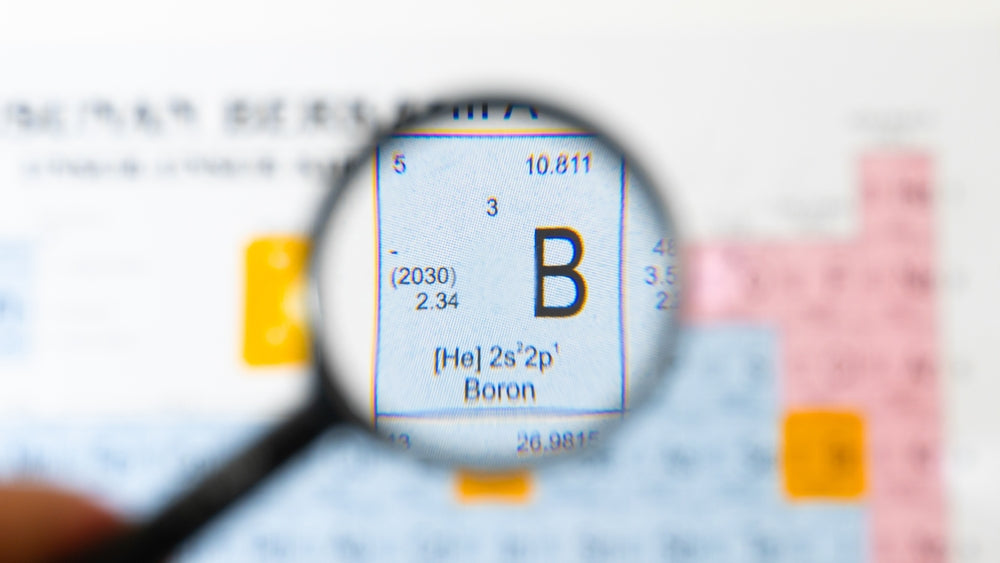
And there's a trace mineral that most people have never considered, one that research suggests can directly influence this ratio. Boron. In this blog, we talk about how this little known nutrient could make a big difference in your T bottom line.
To understand why boron matters, you first need to understand how testosterone actually works in your body—because it's not as simple as more is better.
When testosterone enters your bloodstream, it doesn't just float around freely. Approximately 98% of it binds to proteins, primarily a glycoprotein called sex hormone-binding globulin (SHBG).

SHBG can be thought of as a transport vehicle- it carries testosterone through your bloodstream, but while testosterone is bound to SHBG, it can't exit your capillaries and enter your cells. It's essentially locked in transit.
The numbers don’t look good- roughly 2% of your testosterone circulates as free testosterone—the biologically active form that can bind to androgen receptors and actually do something.
Another 40-50% binds tightly to SHBG, making it effectively unavailable. The remainder loosely binds to albumin and can become available under certain conditions.
This creates a scenario where two men with identical total testosterone levels can have dramatically different free testosterone and experience vastly different outcomes in terms of muscle building, recovery, energy, and libido.
The man with lower SHBG will have more testosterone available for his body to use, even if his total number looks the same on paper.
So, what raises SHBG? Several factors that are surprisingly common among fitness-focused individuals: experience level, caloric restriction, extended endurance training, low-carbohydrate diets, and hyperthyroidism.
In other words, the very lifestyle factors that often accompany serious training can inadvertently push SHBG higher, binding up more of your testosterone and leaving less available for the processes you care about.
Boron is one of those nutrients that flies under the radar. It's found naturally in soil and concentrated in certain fruits, vegetables, nuts, and legumes. You're probably getting some from your diet right now—typical intake ranges from 1-3mg daily—but you've likely never given it a second thought.

That's partly because boron hasn't been officially classified as an essential nutrient by regulatory bodies. But emerging research suggests it plays important roles that become apparent when intake is inadequate. Boron appears to be involved in bone metabolism and the utilization of calcium and magnesium.
It influences vitamin D metabolism and activation. It affects cognitive function and the inflammatory response. And, most relevant to this discussion, it impacts the metabolism of steroid hormones, including testosterone and estrogen.
The challenge is that most people aren't getting much boron from their diet anymore. Modern agricultural practices have depleted soil boron in many regions, and the foods richest in boron—prunes, raisins, almonds, avocados—aren't exactly staples in most training diets.
Research studies typically use doses of 6-10mg daily, which is essentially impossible to achieve through food alone without specifically targeting boron-rich foods.
The relationship between boron and testosterone isn't just theoretical speculation—there's actual human research worth examining, though it comes with important caveats about study size and replication.
The most cited research comes from Naghii and colleagues, published in the Journal of Trace Elements in Medicine and Biology. In this study, eight healthy male volunteers supplemented with 10mg of boron daily for one week.
The results were striking: free testosterone increased significantly, rising from an average of 11.83 pg/mL to 15.18 pg/mL—roughly a 28% increase. Meanwhile, estradiol (a form of estrogen) dropped substantially, falling from 42.33 pg/mL to 25.81 pg/mL.
Perhaps more relevant to our discussion, SHBG levels showed a significant decrease within just six hours of supplementation. This rapid effect on SHBG suggests a potential mechanism for how boron increases free testosterone—by reducing the amount of binding protein available to lock testosterone up.
The study also found decreases in several inflammatory markers: interleukin-6 dropped, high-sensitivity C-reactive protein fell by approximately 50%, and tumor necrosis factor alpha decreased by around 30%. Since chronic inflammation can negatively impact testosterone production and metabolism, these anti-inflammatory effects may provide additional hormonal benefits.
Earlier research from Nielsen and colleagues showed similar hormonal effects in postmenopausal women, with boron supplementation significantly increasing both testosterone and estradiol levels, particularly in those with low magnesium intake. This suggests boron's effects on steroid hormones aren't limited to men.
It's important to note the limitations here. These are small studies with short durations, and not all research has shown positive results. A 1994 study of male bodybuilders found that 2.5mg of boron daily for seven weeks didn't improve testosterone, strength, or muscle mass compared to training alone. The dose may have been too low, or the training stimulus may have overwhelmed any supplement effect. Or there’s also the real possibility that the bodybuilders were using anabolic products that effectively render natural products obsolete.
No single compound works in isolation when it comes to hormonal health. Boron's potential SHBG-lowering effects represent one piece of a much larger puzzle that includes lifestyle factors, foundational nutrition, and targeted supplementation working together.
The foundation layer can't be supplemented away. Quality sleep—when the majority of testosterone production occurs—remains non-negotiable. Resistance training with adequate intensity provides the stimulus for hormonal adaptation.

Stress management keeps cortisol from chronically interfering with testosterone. And sufficient caloric intake, particularly adequate dietary fat, provides the raw materials for steroid hormone synthesis.
On top of that foundation, certain nutrients play supporting roles. Zinc is directly required for testosterone synthesis—when zinc is low, the testes can't efficiently convert cholesterol to testosterone.
Magnesium is involved in hundreds of enzymatic reactions including hormone production, and research shows that exercising while supplementing magnesium increases testosterone levels more than exercise alone. Vitamin D functions as a hormone itself and influences testosterone production.
This is where a comprehensive approach becomes valuable. Force from Brickhouse Nutrition addresses multiple testosterone-supporting pathways simultaneously. It includes chelated zinc and magnesium for foundational mineral support, vitamin B6 which helps regulate testosterone and decrease prolactin, and KSM-66 ashwagandha for stress response and cortisol management.
Additional ingredients like Tongkat Ali, Fadogia Agrestis, and Tribulus Terrestris target testosterone production through complementary mechanisms.
The strategic consideration here is that boron specifically targets SHBG—something most testosterone support formulas don't directly address. Stacking boron with a comprehensive formula like Force creates a two-pronged approach, supporting testosterone production while also improving testosterone availability. You're covering more bases than either approach alone.
For foundational micronutrient coverage, Fortify provides whole-food sourced vitamins and minerals including zinc, magnesium, and chromium—ensuring your baseline nutritional status supports optimal hormonal function.
If you're considering adding boron to your supplement stack, here's what the research and practical experience suggest.
Dosage: Research studies showing hormonal effects typically use 6-10mg daily. The upper tolerable limit has been set at 20mg per day for adults, meaning there's a reasonable margin of safety. Starting conservatively at 3-6mg and assessing your response before increasing makes sense, particularly since individual responses to supplements vary.
Timing: There's no strong evidence suggesting a specific optimal timing window for boron. It can be taken with or without food. Consistency in daily intake matters more than precise timing—pick a time that works for your routine and stick with it.
Form: Boron supplements come in several forms, including boron citrate, boron glycinate, and boron aspartate. Research comparing the bioavailability of these forms is limited, so there's no clear winner. Any reputable form at an appropriate dose should work.
Expectations: Boron isn't a dramatic, feel-it-immediately compound like caffeine. You won't notice an acute effect. Research suggests hormonal changes can occur within a few weeks, but the shifts are modest rather than dramatic. The best way to assess whether boron is working for you is through before-and-after blood work measuring free testosterone and SHBG, rather than subjective feelings.
Safety: Boron is generally well-tolerated at aformentioned doses. However, those with hormone-sensitive conditions or taking medications that affect hormones should consult with a healthcare provider before supplementing. The goal is always to make informed decisions about what you put in your body.
Let's bring this back to practical outcomes, because biochemistry only matters if it translates to real-world results.
Optimized free testosterone availability supports improved recovery between training sessions—you bounce back faster and can handle higher training frequencies or volumes.
It enhances your response to resistance training stimulus, meaning the same workout produces better adaptations. Over time, it contributes to favorable shifts in body composition, supporting muscle maintenance or growth while potentially improving fat utilization. And yes, it influences energy, motivation, and libido—the intangibles that make consistent training sustainable.
None of this means boron is a magic bullet. It's not going to transform your physique overnight or compensate for poor training, inadequate sleep, or a garbage diet. But for someone who already has those fundamentals in place and is looking for an edge, targeting SHBG with boron addresses a mechanism that most testosterone optimization strategies completely overlook.
The gap between total testosterone and free testosterone explains why many men feel underwhelming results despite having hormone numbers that look acceptable, or even impressive on paper. SHBG is often the hidden variable—the protein that keeps your testosterone locked up and unavailable for the processes that actually matter.
Boron offers a unique value proposition in this context. It's not stimulating more testosterone production—your body handles that. Instead, research suggests it may help liberate what's already there by modulating SHBG levels. It's a low-cost, low-risk addition that addresses a specific mechanism most people have never considered.
Combined with comprehensive hormonal support from something like Force, foundational micronutrients from Fortify, and the lifestyle factors that can't be supplemented away, you're building a complete approach to testosterone optimization. One that doesn't just focus on production, but on making sure what you produce is actually available to use.
So, if you've been chasing testosterone numbers without the results you expect, it might be time to look at the other side of the equation. Free testosterone is the metric that actually matters—and boron might be the overlooked tool that helps you access more of it.
When Should You Take Collagen? A Science-Based Guide to Timing Your Supplement for Best Results
The collagen supplement market has exploded over the past decade, with consumers spending billions annually on powders, capsules, and collagen-infused products promising everything from smoother sk...
Read more about When Should You Take Collagen? A Science-Based Guide to Timing Your Supplement for Best ResultsEMOM vs. Traditional Sets: The Power Of Density Training
Here's a question that might change how you think about your training- What if spending less time in the gym actually produced better results? Most lifters operate under an unspoken assumption—that...
Read more about EMOM vs. Traditional Sets: The Power Of Density Training
© 2026 BrickHouse Nutrition, llc. All rights reserved.