Your cart is empty
Free shipping on all US orders

Free shipping on all orders
Your Cart
Your cart is empty
Free shipping on all US orders

Here's a question that might change how you think about your training- What if spending less time in the gym actually produced better results?
Most lifters operate under an unspoken assumption—that longer workouts signal dedication, that more time under the fluorescent lights equals more gains. But watch closely next time you're in a commercial gym.
Count how many minutes are actually spent lifting versus scrolling phones, chatting, or simply staring into space between sets. The typical hour-long session might contain only 15-20 minutes of actual work.
Now imagine compressing that same work into a tighter window. Same reps, same weight, half the time. Your heart rate stays elevated. Your muscles never fully recover between efforts. The metabolic demand skyrockets. This isn't just a time-saving hack; it's a fundamentally different training stimulus that your body must adapt to in powerful ways.
The method behind this approach has a name, EMOm, and understanding the science behind it could reshape your entire approach to building muscle, burning fat, and developing the kind of work capacity that separates recreational lifters from true athletes.
EMOM stands for Every Minute on the Minute, and the concept is elegantly simple. When the clock hits zero, you perform a prescribed number of reps. Whatever time remains in that minute is your rest. When the next minute begins, you go again. Repeat for a set duration—typically 10 to 30 minutes.

The beauty lies in what this structure forces upon you. If your set of 8 kettlebell swings takes 20 seconds, you get exactly 40 seconds of recovery. Move faster, earn more rest. Move slower, and the clock punishes you with abbreviated recovery. There's no negotiating with the minute hand, no convincing yourself you need "just a little more" rest. The clock is both coach and accountability partner.
Think of it as a metronome for your training. Musicians use metronomes to maintain tempo and build rhythmic discipline. EMOM does the same for lifters—it imposes structure on what might otherwise become a wandering, unfocused session. Every workout has the same density, the same intensity, the same measurable quality, regardless of how motivated you feel walking through the door.
To understand why EMOM works, you need to understand the fuel system powering explosive movement. Every muscular contraction requires adenosine triphosphate—ATP—the molecular currency your cells spend to do anything. The problem is that muscles store only enough ATP for a few seconds of maximal effort. Sprint all-out, and you'd deplete it almost instantly.

Enter phosphocreatine (PCr), your muscles' rapid-response energy reserve. When ATP runs low, PCr donates its phosphate group to regenerate it, keeping the power flowing for another 10-15 seconds of high-intensity work.
This ATP-PCr system is why you can perform a heavy set of squats or an explosive sprint—it's the energy pathway that powers short, intense efforts before the slower glycolytic and aerobic systems take over.
Here's where timing becomes critical. Research using magnetic resonance spectroscopy has mapped exactly how quickly phosphocreatine replenishes after depletion.
Approximately 50% of depleted PCr is restored within 30 seconds. By 60 seconds, you've recovered roughly 85-90%. Full recovery—returning to baseline levels—takes 3-5 minutes.
This creates a fascinating training decision. Traditional strength training prescribes 3-5 minute rest periods to allow complete PCr recovery, maximizing force production on each set. But what happens when you deliberately interrupt that recovery? When you go again at 60 seconds instead of 180?
You create a metabolic environment that forces adaptation. The incomplete PCr recovery means each subsequent set starts from a slight deficit. Your muscles must become more efficient at regenerating ATP from other pathways.
Your cardiovascular system steps up to deliver more oxygen for aerobic ATP production. Over time, research shows that high-intensity interval training can improve PCr recovery kinetics by approximately 14% in as little as two weeks. Your muscles literally get better at recharging their batteries.
This is why the 60-second EMOM window isn't arbitrary—it's physiologically strategic. It provides enough recovery to maintain quality work but not so much that you lose the metabolic training effect. You're operating in a Goldilocks zone where strength meets conditioning.
Supporting this energy system directly makes EMOM training more effective. Foundation combines creatine monohydrate with PEAK ATP®—the patented form of adenosine 5'-triphosphate disodium.
Creatine saturates your muscles with the raw material for phosphocreatine synthesis, increasing your PCr reserves. PEAK ATP® provides a bioavailable form of ATP itself, supporting the energy system at multiple levels. When your training strategy specifically targets the ATP-PCr pathway, supporting that pathway nutritionally becomes a logical priority.
Training density might be the most underappreciated variable in any program design. The formula is simple: total work divided by total time. Two lifters can perform identical exercises with identical weights for identical reps, but if one completes the session in 20 minutes while the other takes 40, they've experienced fundamentally different stimuli. The first lifter trained at twice the density.
Why does this matter? Research consistently shows a dose-response relationship between training volume and muscle hypertrophy—more work generally means more growth, up to a point.

EMOM training allows you to accumulate impressive volumes in compressed timeframes. A 20-minute EMOM with 5 reps per minute delivers 100 quality repetitions. Achieving that same volume with traditional 2-3 minute rest periods would take 35-45 minutes.
But density affects more than just time efficiency. High-density training creates significant metabolic stress while maintaining mechanical tension—the two primary drivers of muscle growth.
The incomplete rest periods keep heart rate elevated, often in the 70-85% of maximum range, creating a concurrent cardiovascular effect. You're building muscle and developing your aerobic system in the same session.
This dual stimulus is the mechanism behind body recomposition—the simultaneously building muscle and losing fat that many believe is impossible. The elevated metabolic demand during training, combined with the extended oxygen debt afterward (called EPOC, or excess post-exercise oxygen consumption), creates a caloric furnace that continues burning long after you've left the gym.
Studies show that high-intensity interval-style training produces significantly higher EPOC than either steady-state cardio or traditional resistance training with long rest periods.
For those specifically targeting body recomposition, supporting metabolic rate becomes important. Lean contains InnoSlim® and Meratrim® to support healthy metabolism, plus Chromium for glucose disposal—helping your body efficiently partition nutrients toward muscle and away from fat storage. When combined with the elevated metabolic demands of density training, you're attacking body composition from multiple angles.
Neither EMOM nor traditional training is universally superior—they excel at different objectives. Understanding these differences helps you deploy each strategically.
For pure strength development—maximizing the weight you can lift for a single repetition—traditional training with complete rest periods (3-5 minutes) remains king. Full PCr recovery allows maximal force production on every set, and the neural adaptations that drive strength gains require high-quality, high-force contractions. If your primary goal is a bigger squat or deadlift, longer rest serves you well.
EMOM shines for strength-endurance: the ability to maintain submaximal force across many sets without significant degradation. This quality matters enormously for athletes, tactical professionals, and anyone whose performance depends on repeated efforts rather than single maximal attempts.
The firefighter carrying equipment up multiple flights of stairs, the wrestler competing through overtime periods, the soccer player sprinting repeatedly across 90 minutes—these are strength-endurance demands.
For hypertrophy, both methods can be highly effective through different mechanisms. Traditional training emphasizes mechanical tension—heavy loads with full recovery. EMOM emphasizes metabolic stress and accumulated volume. Given that research supports total volume as the primary driver of muscle growth, EMOM's ability to pack more work into less time makes it a potent hypertrophy tool.
Work capacity—the total amount of training you can perform and recover from—is where EMOM truly separates itself. Athletes who regularly train with EMOMs often find traditional workouts feel easier because their recovery systems have been supercharged. The incomplete-rest environment forces adaptations that make complete-rest training feel like a vacation.

The smartest approach combines both methods. Use traditional training for your primary strength movements early in the session when fresh, then shift to EMOM protocols for accessory work and conditioning. This hybrid captures the benefits of each while covering their respective limitations.
Traditional training allows you to coast between sets. Check your phone, chat with a friend, let your mind wander—the long rest periods forgive a lack of focus. EMOM tolerates no such luxury. Every 60 seconds demands readiness. Mental fatigue often arrives before physical fatigue, making focus and sustained alertness as important as raw physical capacity.

This creates a specific energy requirement. The worst scenario for EMOM performance is the classic energy drink spike-and-crash: 30 minutes of jittery intensity followed by a cliff dive mid-workout. When you're committed to another 15 minutes of minute-by-minute efforts, crashing at the halfway point isn't just uncomfortable—it's performance-destroying.
EMOM rewards sustained, even energy that lasts the entire session. Dawn to Dusk was designed precisely for this demand. Its extended-release formula combines TeaCrine® with pterostilbene caffeine co-crystal to deliver up to 10 hours of smooth, crash-free energy. Unlike spike-and-crash pre-workouts, this keeps you locked in from the first minute to the last.
High-density training extracts a toll. The compressed rest periods don't allow complete lactate clearance within the session, leading to pronounced accumulation of metabolic byproducts.
The sheer volume of work—often 100+ reps in 20 minutes—creates significant muscle damage. When you first transition to EMOM-style training, expect the soreness to remind you that you've asked something new of your body.
Supporting recovery during training itself provides an edge. Sipping amino acids throughout an EMOM workout delivers raw materials for muscle protein synthesis even while muscles are working.
Free-form amino acids absorb rapidly—within minutes—compared to the hours required for whole protein digestion. This means they're available immediately when muscles need them most.
Essential Amino Acids from Brickhouse Nutrition contains all nine EAAs including the branched-chain amino acids, plus cyclic dextrin for sustained energy. The high leucine content directly triggers muscle protein synthesis via the mTOR pathway—the master switch for muscle building.
Post-workout nutrition becomes equally critical. After the metabolic storm of a hard EMOM session, muscles are primed for nutrient uptake—what's often called the anabolic window. The Brickhouse Whey delivers 27 grams of fermented whey isolate with 37% more leucine per serving than standard whey. The fermentation process eliminates lactose and improves digestibility—important when your digestive system is already stressed from intense training. Fast-digesting protein when muscles are most receptive maximizes the training investment you've just made.
Understanding the science matters, but results come from execution. These protocols progress from beginner-friendly to advanced, each designed to build different capacities while following EMOM principles.
Beginner Foundation Builder (12 minutes)
Every minute: 5 goblet squats with a moderate kettlebell or dumbbell. That's it—60 total squats in 12 minutes. If you're finishing each set with more than 40 seconds remaining, add weight or a rep next session. If you're cutting it close with less than 30 seconds of rest, reduce the load. The goal is sustainable intensity that you can maintain from minute one to minute twelve without significant degradation.
Intermediate Alternating EMOM (16 minutes)
Odd minutes: 6 dumbbell thrusters (squat-to-press). Even minutes: 8 kettlebell swings. This alternating structure creates a natural agonist-antagonist pairing—your legs and shoulders rest while you swing, your hips and posterior chain rest while you thrust. The result is a slightly longer recovery between the same-pattern movements while maintaining overall density. Eight rounds total: 48 thrusters and 64 swings in 16 minutes.
Strength-Focused E2MOM (20 minutes)
Every 2 minutes: 3 back squats at 75-80% of your one-rep max. The extended interval allows heavier loading while still maintaining density compared to traditional training. Ten rounds delivers 30 quality reps with a challenging load in just 20 minutes—volume that would typically require 35-40 minutes with standard 3-minute rest periods. This protocol builds strength and strength-endurance simultaneously.
Body Recomposition Triple EMOM (21 minutes)
Minute 1: 8 front squats. Minute 2: 10 push-ups. Minute 3: 12 calories on the rower or bike. Repeat for 7 rounds. This creates a full-body stimulus with continuously elevated heart rate—resistance training and cardiovascular conditioning fused into a single session. The varied movement patterns prevent any single muscle group from limiting the workout, while the constant cycling keeps metabolic demand high throughout.
Programming Guidelines
Choose rep counts that take 20-35 seconds to complete. This leaves 25-40 seconds of rest—enough for meaningful PCr recovery without losing metabolic stress. If you're consistently finishing in under 20 seconds, you can work harder. If sets take longer than 40 seconds, reduce load or reps. Start with 10-15 minute EMOMs and progressively build to 20-30 minutes as your work capacity adapts.
The metabolic demands of EMOM training extend beyond peri-workout nutrition. The sustained high output requires adequate glycogen stores—training fasted or on very low carbohydrates may compromise EMOM performance more than traditional training, where long rest periods allow greater reliance on fat oxidation between sets. A balanced pre-workout meal 2-3 hours before training provides the substrate your muscles need to perform.

High-intensity training also increases oxidative stress—the production of reactive oxygen species that can damage cells if left unchecked. Athletes pushing their metabolic limits need robust antioxidant defenses, along with the full spectrum of micronutrients that support energy production, recovery, and adaptation.
This is where many nutrition plans fall short: they nail the protein and calorie targets while ignoring the vitamins, minerals, and phytonutrients that make everything work.
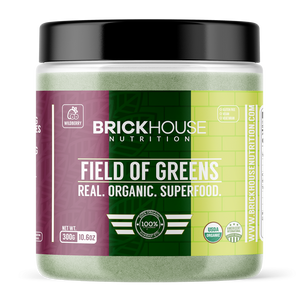
Field of Greens addresses this gap with whole-food nutrition from organic fruits and vegetables. An Auburn University clinical study demonstrated that Field of Greens improves antioxidant capacity and reduces markers of oxidative stress—exactly what athletes need when pushing metabolic boundaries with density training. Starting each day with a scoop creates a nutritional foundation that supports the training demands to come.
EMOM training isn't magic—it's applied physiology. The fixed rest intervals exploit the kinetics of phosphocreatine recovery to create a training stimulus that builds strength, muscle, and work capacity simultaneously.
The high density drives body recomposition by elevating metabolic demand without sacrificing the mechanical tension that muscles need to grow. And the time efficiency makes these benefits accessible even to those who can't spend hours in the gym.
Start simple. Replace one traditional workout per week with a 12-minute EMOM. Pick a movement you're comfortable with, choose a challenging but sustainable rep count, and let the clock do its work. Track your performance—the weights used, the reps completed, how you feel in minute 10 versus minute 1. In four to six weeks, you'll have data showing what this approach can do for you.
Boron: The Overlooked Key to Free T
You're doing everything right. The training is dialed in, sleep is prioritized, and your diet looks like something out of a sports nutrition textbook. Maybe you've even had your testosterone levels...
Read more about Boron: The Overlooked Key to Free TNucleus Overload Training: High Frequency Stimulus For Stubborn Muscles
What if the solution to your stubborn calves, lagging shoulders, or underwhelming arms isn't training harder—but training more often? The science of myonuclear acquisition suggests that some muscle...
Read more about Nucleus Overload Training: High Frequency Stimulus For Stubborn Muscles
© 2026 BrickHouse Nutrition, llc. All rights reserved.