Your cart is empty
Free shipping on all US orders

Free shipping on all orders
Your Cart
Your cart is empty
Free shipping on all US orders
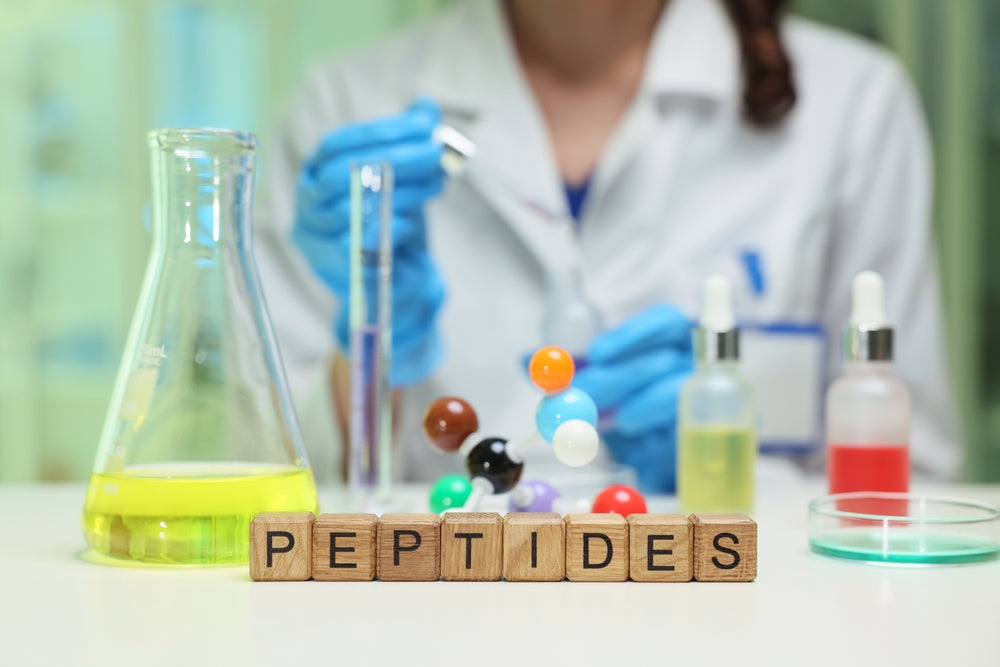
If you have spent any time recently listening to established health and longevity podcasts, browsing fitness forums, or following wellness influencers on social media, you have almost certainly heard the word "peptides."
A few years ago, this term was mostly confined to university research laboratories, obscure biohacking message boards, and the whisper networks of elite professional athletes trying to recover from injuries at superhuman speeds. Today? It is one of the most explosive, highly debated, and sought-after topics in the mainstream wellness world.
People are claiming that these mysterious compounds can do everything from healing torn rotator cuffs in a matter of weeks and curing chronic gut issues, to melting away stubborn body fat, turning back the biological clock on skin, and optimizing deep sleep.
But with this sudden surge in popularity comes a massive wave of confusing terminology, scientific jargon, and a very murky legal gray area. What the heck is a secretagogue? What does BPC-157 even mean? Are these things legal, and more importantly, are they safe?
If you consider yourself health-conscious but find yourself utterly lost when it comes to the science of peptides, you are in the right place. In this blog, we are going to break down the science of what peptides actually are, and provide a balanced view of their incredible potential benefits and very real risks.
Before we can understand how peptides might heal a torn tendon or help you lose weight, we have to understand what they are on a biological level. Fortunately, you don't need a PhD in biochemistry to grasp the concept.
To understand peptides, you first need to understand amino acids. Amino acids are the fundamental building blocks of life. Everyone has heard of amino acids. But just in case you haven’t, consider this.

Think of amino acids as individual letters of the alphabet. If you string a few of these letters together, you create a short word. In biology, that short word is a peptide. If you keep adding letters together to create long, complex sentences and paragraphs, you eventually get a protein.
Scientifically speaking, a peptide is simply a short chain of amino acids linked together by peptide bonds. While proteins are typically massive structures made up of hundreds or thousands of amino acids, peptides are much smaller—usually consisting of anywhere between 2 and 50 amino acids.
Peptides are not foreign chemicals; they occur naturally and abundantly inside your own body right now. Insulin, for example, is a naturally occurring peptide hormone that regulates your blood sugar.
In the body, peptides primarily act as signaling molecules. Because they are so small, they can easily navigate through the bloodstream and penetrate tissues. They work on a lock and key mechanism. A specific peptide (the key) floats through the body until it finds its corresponding receptor on the surface of a cell (the lock).
When the peptide binds to that receptor, it delivers a very specific message, telling the cell what to do. It might tell the cell to lower inflammation, release a specific hormone, produce collagen, or initiate tissue repair. When you introduce synthesized research peptides into the body, you are essentially providing more of these molecular messengers to up-regulate the body's natural healing and optimizing processes.
You might be wondering, "If these are so great, why can't I just buy them in a pill at the local supplement store?"

Unlike traditional vitamins, minerals, or even protein powders, most peptides cannot survive the harsh environment of the human digestive system. If you were to swallow a capsule of most peptides, your stomach acid and digestive enzymes would immediately break the delicate amino acid chains apart before they could ever enter your bloodstream to do their job.
Because of this, the vast majority of peptides are administered via subcutaneous injection (a tiny, virtually painless injection into the fat tissue, much like an insulin shot). Injecting the peptide ensures it goes directly into the system with maximum bioavailability. While science is advancing and we are seeing the emergence of some nasal sprays, topical creams, and specialized oral formulations (which use protective compounds to survive stomach acid), subcutaneous injection remains the gold standard for clinical efficacy.
Why the sudden explosion of interest? The rise of peptides perfectly aligns with a massive cultural shift in how we view human health.
For decades, modern medicine was highly reactionary. The goal was simply "disease management"—you get sick, and the doctor gives you a pill to manage the symptoms. But today’s health-conscious populations are no longer satisfied with merely not being sick.
We have entered the era of optimization. People are focusing on healthspan (the number of years lived in vibrant, robust, capable health) rather than just lifespan (the total number of years alive). Peptides represent a shift toward regenerative medicine—the idea that we can actually repair, restore, and optimize the body's tissues and hormonal profiles rather than just putting a band-aid on degeneration.
Traditional pharmaceutical drugs often take a shotgun approach. You take a pill to fix your shoulder pain, but the drug circulates through your whole body, potentially irritating your stomach lining, taxing your liver, or causing brain fog.
Because peptides are highly specific signaling molecules, they take more of a sniper approach. They are designed to trigger a specific receptor to perform a specific task, and then they are naturally broken down into harmless amino acids by the body. Theoretically, this highly targeted mechanism means peptides can achieve profound clinical results with a fraction of the systemic side effects associated with traditional pharmaceuticals.
We also cannot ignore the role of digital media. Influential figures in the health space—such as Dr. Peter Attia, Dr. Andrew Huberman, Gary Brecka, and Joe Rogan—have brought advanced biological concepts to the masses.

When a listener hears an elite athlete describe how a peptide healed a career-ending injury in weeks, or hears a longevity doctor explain the science of optimizing growth hormone, human curiosity naturally takes over. Information that used to be locked in medical journals is now consumed daily via Spotify and YouTube.
If you browse any peptide clinic or discussion board, you will see a dizzying array of numbers and letters. To clear the confusion, let’s take a look into the five categories of peptides that dominate the conversation today.
What it is: BPC stands for Body Protection Compound. BPC-157 is a 15-amino-acid sequence that is naturally derived from proteins found in human gastric juice.
Why it’s popular: In the peptide world, BPC-157 is legendary, often jokingly referred to as the "Wolverine peptide" for its seemingly magical ability to accelerate healing.
Research (largely in animal models) has shown that BPC-157 heavily promotes angiogenesis—the creation of new blood vessels. When you tear a tendon or a ligament, it heals incredibly slowly because those tissues have very poor blood supply. By promoting the formation of new blood vessels, BPC-157 rushes oxygen and nutrients to the injured area, drastically cutting down recovery time for muscle tears, tendonitis, and ligament sprains.
Because it originates in gastric juice, BPC-157 is also widely used for gastrointestinal issues. Anecdotal and clinical evidence suggest it is highly protective of the gut lining, helping to combat leaky gut syndrome, irritable bowel syndrome (IBS), Crohn’s disease, and even gastric ulcers by regulating the inflammatory response in the intestines.
What it is: TB-500 is a synthetic version of a naturally occurring peptide called Thymosin Beta-4, which is produced in the thymus gland.
Why it’s popular: If BPC-157 is the king of localized healing, TB-500 is the king of systemic healing. These two are very frequently stacked (used together) to treat injuries.
TB-500 has a unique ability to up-regulate a cellular protein called actin. Actin is absolutely vital for cell structure and mobility. By increasing actin, TB-500 allows healthy, healing cells to migrate to the site of an injury much faster. It is highly systemic, meaning if you inject it in your stomach, it will travel through your bloodstream to find and heal the inflammation in your bad knee or aching shoulder. It is widely praised for reducing overall bodily inflammation, improving flexibility, and promoting tissue regeneration in muscles and connective tissues.
What they are: CJC-1295 and Ipamorelin are usually prescribed together in a single vial. They belong to a class of peptides known as secretagogues.
Why they’re popular: To understand secretagogues, you have to understand Human Growth Hormone (HGH). HGH is the hormone of youth—it burns fat, builds muscle, repairs tissue, and gives you deep sleep. In our 20s, we produce lots of it. By our 40s and 50s, production drops off a cliff.

In the past, anti-aging enthusiasts would inject synthetic HGH. However, exogenous HGH shuts down the body's natural hormone production and comes with dangerous side effects, like the unnatural growth of internal organs and an increased risk of cancer.
CJC-1295 and Ipamorelin solve this problem. As secretagogues, they do not introduce synthetic HGH into the body. Instead, they signal your brain's pituitary gland to secrete more of its own natural growth hormone. They restore the natural pulsatile release of HGH you had in your youth. Users report profound improvements in deep REM sleep, accelerated fat loss, better muscle retention, improved skin elasticity, and enhanced overall vitality, all while keeping the body’s natural hormonal feedback loops intact and safe.
What it is: Discovered in 1973, GHK-Cu is a naturally occurring copper complex that combines the peptide GHK (glycyl-L-histidyl-L-lysine) with the element copper.
Why it’s popular: GHK-Cu is the absolute darling of the anti-aging aesthetic world. In the human body, GHK-Cu levels drop drastically as we age (a 20-year-old has high levels in their blood plasma, while a 60-year-old has very little).
This peptide is famous for its ability to promote the production of collagen and elastin, the proteins that keep skin firm and youthful. It also acts as a potent antioxidant, reducing free radical damage. While it can be injected to promote systemic anti-aging and tissue repair, it is most commonly found in high-end topical skincare serums to reduce fine lines, wrinkles, and hyperpigmentation. Furthermore, GHK-Cu has been shown to stimulate blood flow to hair follicles, making it a highly popular treatment for hair thinning and hair loss.
What they are: You know them by their brand names: Ozempic, Wegovy, Mounjaro, and Zepbound. What most people do not realize is that these blockbuster, FDA-approved weight loss drugs are actually peptides.

Why they’re popular: GLP-1 (Glucagon-like peptide-1) agonists have utterly revolutionized the treatment of obesity and type 2 diabetes. They mimic a natural hormone in your gut that tells your brain you are full. They drastically slow down gastric emptying (keeping food in your stomach longer) and silence food noise (the constant, obsessive thoughts about eating).
We include them on this list because the massive mainstream success of Semaglutide and Tirzepatide has created a halo effect for the entire peptide industry. As millions of people learn to comfortably inject a GLP-1 peptide once a week to lose 15% of their body weight, the stigma around injecting other peptides for healing or anti-aging is rapidly fading.
If BPC-157 is so incredible at healing injuries, why didn't your primary care doctor prescribe it when you hurt your back? This brings us to the complicated, often frustrating wild west of the peptide market.
With the exception of GLP-1 agonists and a few others (like insulin), the vast majority of popular peptides—including BPC-157, TB-500, and CJC-1295—are not FDA approved for human use.
This has created a massive, legally gray market online. A quick Google search will reveal dozens of websites openly selling vials of these peptides. How do they do it legally? By labeling every single vial with a strict disclaimer: "For Research Purposes Only. Not for Human Consumption."
By purchasing from these sites, you are legally buying chemicals intended to be used on lab rats or in petri dishes. The peptides arrive as a lyophilized (freeze-dried) powder, requiring the buyer to do their own chemistry by mixing it with bacteriostatic water and determining their own dosages.
The risk here is immense. Because these research chemical companies are totally unregulated by the FDA, no governing body is checking their products. You are entirely reliant on the company’s internal ethics and their third-party testing. If you buy cheap peptides from a disreputable vendor, the vial could be under-dosed, completely fake, or worse—contaminated with heavy metals, dangerous endotoxins, or bacteria.
The landscape is also shifting rapidly. For a long time, functional medicine doctors and longevity clinics could legally prescribe these peptides by having them custom-made at highly regulated compounding pharmacies.
However, late in 2023, the FDA initiated a massive crackdown. They reclassified several highly popular peptides—most notably BPC-157—as bulk drug substances. This ruling effectively banned licensed compounding pharmacies from producing and selling these peptides. The FDA’s stance is that there is simply not enough long-term, human clinical trial data to prove their safety as yet.
This has created massive friction. Holistic doctors argue the FDA is suppressing incredibly safe, life-changing compounds because pharmaceutical companies cannot patent naturally occurring amino acid sequences. The FDA argues it is protecting the public from untested experimental drugs. Regardless of who is right, the crackdown has made it much harder to source these peptides safely and legally.
Even if you source 100% pure peptides, they are not without risks. Tinkering with human biology always has consequences.
Injection Site Reactions: Redness, itching, or swelling at the site of the subcutaneous injection is common.
Water Retention & Blood Sugar: Peptides that manipulate growth hormone pathways (like CJC-1295) can cause temporary water retention, joint aching, and in some cases, decreased insulin sensitivity.
The Unknown Long-Term: While short-term safety profiles for things like BPC-157 look exceptionally promising, the truth is we lack 20-year longitudinal studies. Manipulating growth pathways, for example, is something that must be done cautiously, as aggressive cellular growth could theoretically accelerate the growth of existing, undetected cancer cells.
After reading all the science, the glowing testimonials, and the stark warnings, you might be asking yourself if exploring peptide therapy is the right move for your health journey. If you are considering it, here are the two golden rules you must follow.
Do not play doctor, and do not buy chemicals meant for lab rats online. If you want to explore peptides, you must seek out a professional.
Look for a board-certified functional medicine practitioner, an endocrinologist, or a reputable longevity/anti-aging clinic. These professionals understand the intricate biochemistry involved. They will require comprehensive bloodwork before prescribing anything to ensure you are a safe candidate. Furthermore, they source their peptides from the remaining legal, highly regulated, FDA-inspected compounding pharmacies (for the peptides still allowed), ensuring you receive a product that is pure, sterile, and accurately dosed.
There is a dangerous tendency in the biohacking world to look for magic bullets. Peptides are not magic.

Think of your health like baking a cake. The cake itself is your foundation: sleeping 7 to 8 hours a night, eating a nutrient-dense whole-food diet, drinking plenty of water, managing your psychological stress, engaging in zone 2 cardiovascular exercise, and lifting heavy weights.
Peptides are the sprinkles on the frosting of that cake. If your foundation is broken—if you are sleeping four hours a night, eating ultra-processed foods, and sitting at a desk all day—injecting BPC-157 or a growth hormone secretagogue is a complete waste of your time and money. Peptides are designed to optimize a biological system that is already being treated with respect. Build the foundation first.
A much better option is to first ensure your nutritional bases are met with smart supplementation. Fortify, a whole-food multivitamin, and Radiance collagen are an excellent starting point for ensuring your body’s health is supported.
Research peptides offer an incredibly exciting, tantalizing glimpse into the future of healthcare. We are standing on the precipice of an era of regenerative medicine, where we can use the body’s own amino acid signaling codes to trigger profound healing, reverse cellular aging, and optimize our vitality well into our later years.
However, we are also living in the wild west of this technology. While the underlying science is incredibly promising, the unregulated online market, the shifting FDA legal landscape, and the lack of long-term human data require extreme caution, thorough self-education, and professional medical guidance. Peptides are a powerful tool, but like any powerful tool, they must be wielded with respect.
Medical Disclaimer: The information provided in this article, while written by a Pharmacist, is for educational and informational purposes only and does not constitute medical advice. Research peptides are largely experimental and, in many cases, not approved by the FDA for human use. Always consult with a licensed, qualified healthcare provider before making any changes to your health regimen or exploring peptide therapies.
The Food Pyramid is Dead (And Flipped): Why America’s New Dietary Focus is Exactly What We Need
If you grew up in the 1990s or early 2000s, you probably remember staring at the colorful Food Guide Pyramid on the wall of your elementary school cafeteria or the back of your cereal box. It was t...
Read more about The Food Pyramid is Dead (And Flipped): Why America’s New Dietary Focus is Exactly What We NeedBrickHouse Lean vs. Transparent Labs Recomp Stim-Free: Which Fat Burner is Right for You?
Fat burners are easily the most polarizing supplement category on the market, you either love these products or hate them. Yet, the controversy isn’t because they don’t work. It’s because they’re o...
Read more about BrickHouse Lean vs. Transparent Labs Recomp Stim-Free: Which Fat Burner is Right for You?
© 2026 BrickHouse Nutrition, llc. All rights reserved.