Your cart is empty
Free shipping on all US orders

Free shipping on all orders
Your Cart
Your cart is empty
Free shipping on all US orders
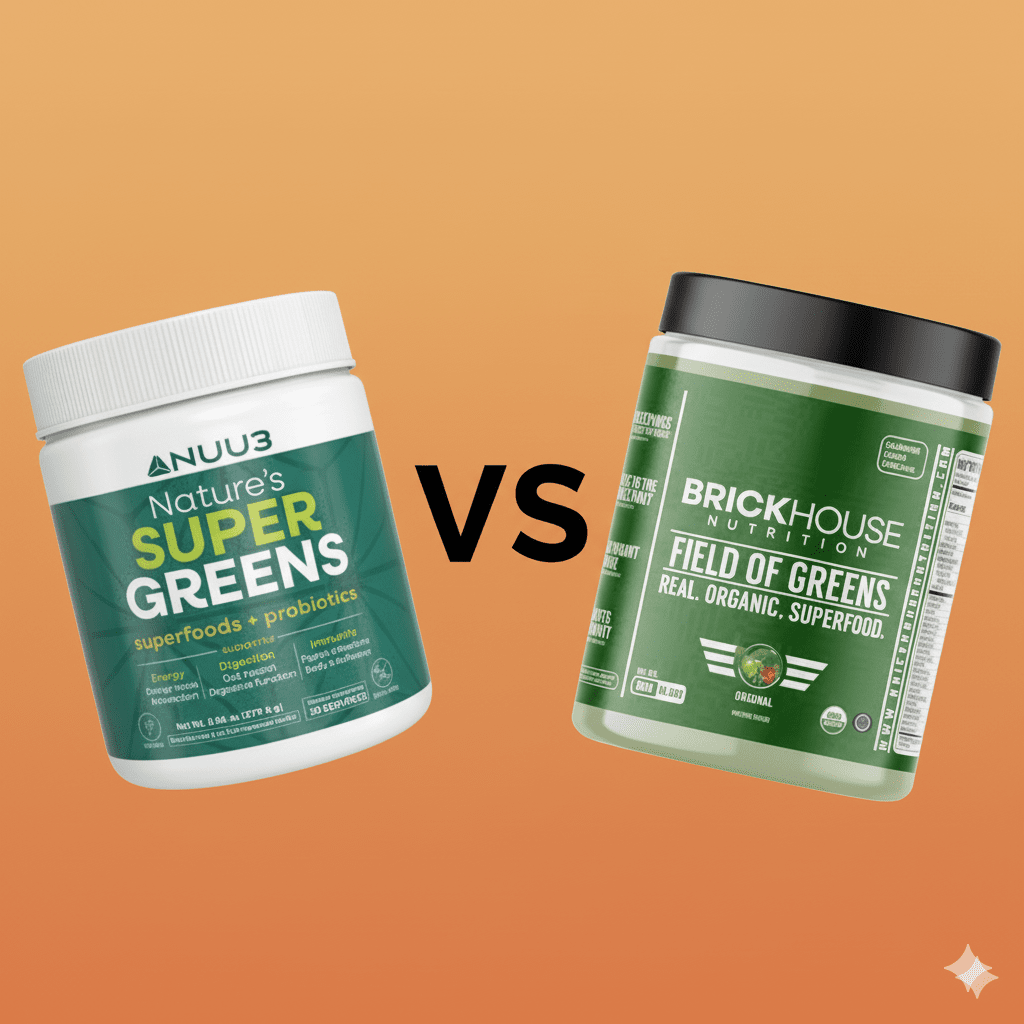
NUU3 Supergreens Review: Is This Greens Powder Worth The Price?
The greens powder market is booming—and so are the bold claims. Improved energy, better gut health, stronger immunity... but how do you separate products that actually deliver from those simply riding the hype wave?
NUU3 Supergreens has been gaining attention as a greens supplement that promises to do it all. Marketed as containing "50+ nutrient-dense key ingredients," this powder claims to support digestion, immunity, energy, metabolism, and cognitive function. At $49.99 for 30 servings (roughly $1.67 per serving), it positions itself as an affordable entry point into the superfood supplement space.
The formula includes blends of vegetables, fruits, probiotics, enzymes, and adaptogenic mushrooms—an impressive ingredient list on paper. But does it actually deliver results, or is it another case of marketing outpacing substance?
In this comprehensive, evidence-based review, we're going to examine exactly what's inside NUU3 Supergreens, evaluate the scientific backing behind its claims, and determine whether it represents genuine value—or if there are better alternatives that offer clinical validation, certified organic ingredients, and proven results.
Let's start by looking at what's actually in the formula.
NUU3 Supergreens contains several ingredient categories, each targeting different aspects of health:
Proprietary Blend (2.6g): Organic barley grass, spirulina, chlorella cracked cell wall powder, and soy lecithin. However, the individual amounts within this blend are not disclosed.
Vegetable Blend (1.5g): Carrot root, broccoli head, spinach leaf, cauliflower floret, horseradish tree leaf, and collards (kale) leaf powder.
Apple & Flax: Apple fruit powder (700mg) and flax seed powder (700mg) provide fiber and phytonutrients.
Enzyme Blend Complex (200mg): Digestive enzymes including bromelain, papain, protease, amylase, lipase, cellulase, and lactase to support nutrient absorption.
Probiotic Blend Complex (200mg): Four probiotic strains—Lactobacillus acidophilus, Bifidobacterium longum, L. casei, and L. rhamnosus.
Vegetable & Fruit Blend (180mg): Green tea leaf extract, quercetin, tomato, spinach, resveratrol, collards, carrot, broccoli, pomegranate, cranberry, blueberry, strawberry, and raspberry.
Additional Ingredients: Rice bran (100mg), milk thistle (100mg), barley malt (100mg), aloe vera (85mg), matcha green tea (50mg), reishi mushroom (50mg), chaga mushroom (50mg), lion's mane mushroom (50mg), plus smaller amounts of acerola, beet root, dandelion, cassia bark, turmeric, kelp, Japanese knotweed, and licorice root extracts.
Here's something many consumers overlook: NUU3 Supergreens uses a Supplement Facts panel, not a Nutrition Facts panel.
Why does this matter? The type of label a product carries tells you a lot about what's inside:
Supplement Facts panel: Indicates the product is classified as a dietary supplement—often relying on extracts and isolated compounds
Nutrition Facts panel: Indicates the product qualifies as real food—the same label you'd see on actual fruits and vegetables
Products made from 100% real, whole fruits and vegetables can use a Nutrition Facts panel. Our flagship product, Field Of Greens proudly uses a nutrition facts panel.

The fact that NUU3 uses a Supplement Facts panel tells us their formula is classified as a supplement rather than whole food nutrition.
Additionally, NUU3's core greens are hidden in a "Proprietary Blend" of 2.6g containing barley grass, spirulina, chlorella, and soy lecithin—but without disclosing how much of each ingredient is included. This makes it impossible to know if you're getting therapeutic doses of these key greens or just trace amounts for label appeal.
NUU3's website mentions "organic" in some product descriptions. However, there's no clear USDA Organic certification displayed for the complete formula.
Without official USDA certification, "organic" claims can be inconsistent or apply only to select ingredients within a formula. For consumers who prioritize verified organic nutrition—free from synthetic pesticides and fertilizers—this ambiguity is worth noting.
When evaluating any greens powder, look for the official USDA Organic seal. If it's not prominently displayed, the organic claims may not tell the whole story.
NUU3's website states that their ingredients are "extensively researched" and "clinically backed." These are reassuring phrases—but they require closer examination.
Here's the critical distinction: there are no clinical studies conducted on the NUU3 Supergreens formula itself.
What NUU3 references is general research on individual ingredients. Yes, chlorella has been studied. Yes, spirulina has research behind it. Yes, probiotics have documented benefits. But studying an ingredient in isolation is fundamentally different from validating a specific finished product.
Think of it this way: knowing that flour, eggs, and sugar are individually useful doesn't prove that a specific cake recipe tastes good or provides proper nutrition. The final formulation matters.
NUU3 cites internal "consumer surveys" showing impressive numbers:
92% reported easier digestion
95% reported increased energy
93% felt stronger immunity
These figures sound compelling, but there's an important distinction to make: consumer surveys are self-reported and uncontrolled. They're valuable for gathering testimonials, but they don't constitute scientific evidence.
A clinical trial involves controlled conditions, objective measurements, comparison groups, and peer review. A consumer survey asks customers how they feel. The two are not equivalent.
NUU3 has no peer-reviewed publications, no independent verification, and no controlled studies demonstrating that their specific product delivers the results they claim.
General ingredient research doesn't account for several crucial factors:
Actual dosages: Are the ingredients present in therapeutic amounts, or just trace quantities for label appeal?
Ingredient interactions: How do the various compounds work together (or against each other) in this specific formula?
Bioavailability: Can your body actually absorb the nutrients in this particular preparation?
Real-world outcomes: What happens when actual people take this exact product over time?
Without product-specific clinical trials, health claims remain theoretical rather than proven. Consumers are essentially trusting marketing rather than science.

Some greens powders have invested in clinical research on their actual finished products. This means researchers tested the exact formula consumers purchase—not just cherry-picked ingredients in isolation.
Studies conducted by independent institutions—particularly universities with no financial stake in the outcome—carry significantly more weight than internal company research or general ingredient references.
Field of Greens is one of the very few greens powders that have clinical backing done at Auburn University, something NUU3 does not.
When a product can point to published clinical outcomes from independent research, consumers can make decisions based on evidence rather than marketing promises. This level of scientific validation separates serious supplements from those relying purely on hype.
Not all greens powders are created equal. The fundamental difference often comes down to whether a product qualifies as real food or is classified as a dietary supplement.
Supplement-classified products (with Supplement Facts panels) often rely on extracts and isolated compounds. While this can deliver concentrated doses of specific nutrients, the extraction process may strip away fiber, natural co-factors, and the full spectrum of phytonutrients found in whole foods.
Whole-food products (with Nutrition Facts panels) maintain their complete nutritional profile. When fruits and vegetables are freeze-dried rather than extracted, they retain fiber, natural enzymes, and the synergistic blend of nutrients as nature intended.
The entire purpose of a greens powder is to replicate the benefits of eating real fruits and vegetables. If you're supplementing because you don't consume enough produce, you want something that delivers nutrition as close to the real thing as possible.
Whole-food powders provide nutrition in forms your body recognizes and absorbs efficiently. The nutrients work together synergistically—just as they do when you eat an actual serving of vegetables.
It's the difference between eating an orange and taking a vitamin C pill. Both provide vitamin C, but the orange delivers fiber, flavonoids, and dozens of other beneficial compounds working in harmony.
Checking the label type is the quickest way to understand what you're buying:
Nutrition Facts panel = real food
Supplement Facts panel = dietary supplement
NUU3 Supergreens uses a Supplement Facts panel, classifying it as a dietary supplement rather than whole food nutrition. Products made from 100% real, organic fruits and vegetables can proudly display a Nutrition Facts panel because they qualify as actual food.
Price per serving is only part of the equation. When assessing true value, smart consumers should ask:
Is the formula backed by clinical research on the actual product? (NUU3: No)
Is it 100% USDA Organic certified? (NUU3: Unclear)
Is it real whole food or a supplement? (NUU3: Supplement Facts panel)
Does the company offer a meaningful results-based guarantee? (NUU3: 60-day refund)
A lower price point means little if you're unsure what you're actually getting or whether it works.
Investing in a clinically validated product—one with documented results from independent research—provides confidence that your money is well spent. Sometimes paying slightly more for proven quality delivers better long-term value than gambling on the cheapest option.
The question isn't just "what does it cost?" but "what am I actually buying?"
The most significant concern with NUU3 Supergreens is the absence of clinical studies on the finished formula. Health claims based on general ingredient research—rather than product-specific outcomes—mean consumers are trusting marketing rather than science.
Without controlled trials demonstrating that this specific product delivers measurable results, the benefits remain theoretical promises rather than documented facts.
While "organic" appears in some NUU3 marketing materials, there's no prominent USDA Organic certification for the complete formula. Without the official seal, organic claims may only apply to certain ingredients—leaving consumers uncertain about what they're actually getting.
For those prioritizing verified organic nutrition, this ambiguity warrants caution.
The Supplement Facts panel indicates NUU3 Supergreens is classified as a dietary supplement rather than whole food nutrition. This may limit the nutritional completeness compared to products made from actual freeze-dried fruits and vegetables that qualify for a Nutrition Facts panel.
Additionally, the core greens are hidden in a proprietary blend, making it impossible to verify if you're getting effective doses of key ingredients.
NUU3's website doesn't prominently display independent third-party testing for purity, potency, or contaminants. Leading supplement brands typically showcase certifications from organizations like NSF or Informed Sport to verify that what's on the label matches what's in the bottle.
Without third-party verification, label accuracy depends entirely on trusting the manufacturer.

When evaluating any greens supplement, here's what separates premium products from the pack:
100% USDA Organic Certification — Verified organic status, not vague claims
Nutrition Facts Panel — Indicates real whole foods, not just a supplement
Clinical Research on the Actual Formula — Not just ingredient studies
Doctor-Formulated — Developed with professional medical input
Meaningful Results-Based Guarantee — Company stands behind outcomes, not just satisfaction
Comprehensive Formula — Greens, antioxidants, and metabolic support working together
Field of Greens by BrickHouse Nutrition meets every criterion on this checklist:
|
Criteria |
Field of Greens |
|---|---|
|
USDA Organic |
✓ 100% Certified |
|
Label Type |
✓ Nutrition Facts (real food) |
|
Clinical Research |
✓ Auburn University study |
|
Doctor-Formulated |
✓ Yes |
|
Guarantee |
✓ Doctor's Improved Health Guarantee |
Field of Greens is the only greens powder validated by university-led clinical research. This isn't general ingredient science—it's research conducted on the actual finished product.
The Auburn University study examined middle-aged adults and found measurable results:
Over 60% of participants showed measurable reduction in biological aging markers in just 30 days
7.8% increase in "AdaptAge"—a marker of protective cellular changes
2.2-unit reduction in "DamAge"—a marker of harmful aging processes
These aren't marketing claims—they're measurable, scientifically documented outcomes from independent research. This is the difference between hoping a product works and knowing it works.
Field of Greens is made from 100% USDA Organic freeze-dried fruits and vegetables—not extracts. Because it qualifies as real food, it uses a Nutrition Facts panel.
The comprehensive formula includes three organic superfood blends plus essential vitamins and minerals:
Organic Greens Blend: Spirulina, wheatgrass, kale, barley grass, broccoli, chlorella, banana, apple, parsley
Organic Antioxidant Powder Blend: Blueberry, cranberry, raspberry, strawberry, beet root, plus organic inulin for prebiotic fiber
Organic Metabolic Powder Blend: Ginger, matcha tea, turmeric—supporting inflammation response and healthy metabolism
Vitamin & Mineral Blend: Vitamins C, E, B-complex, A, K, D2, plus essential minerals for comprehensive daily nutrition
BrickHouse Nutrition is so confident in Field of Greens that they offer an industry-leading promise:
"Take Field of Greens for 60 days before your next doctor's visit. Your doctor will notice your improved health—or your money back."
This isn't a standard satisfaction guarantee. It's a results-based promise backed by clinical research. That level of confidence comes from knowing the product delivers measurable outcomes.
Ready to try a greens powder backed by real science? Try Field of Greens risk-free today.
NUU3 Supergreens offers an affordable greens powder with a variety of ingredients including vegetables, probiotics, enzymes, and adaptogenic mushrooms. The price point is attractive, and the ingredient list looks decent on paper.
However, several factors give us pause:
No clinical studies on the actual formula—just general ingredient references
Unclear USDA Organic certification status
Supplement Facts panel (supplement, not whole food)
Proprietary blend hides amounts of key greens ingredients
No third-party testing prominently disclosed

If you prioritize clinical validation, verified organic ingredients, and whole-food nutrition, Field of Greens delivers what NUU3 cannot prove:
✓ 100% USDA Organic certified
✓ Nutrition Facts panel (real whole food)
✓ Auburn University clinical study with documented results
✓ Doctor-formulated
✓ Doctor's Improved Health Guarantee
✓ Comprehensive greens + antioxidants + metabolic blend + vitamins & minerals
When it comes to your health, you deserve more than marketing claims. You deserve clinical proof, certified organic ingredients, and real whole-food nutrition.
NUU3 Supergreens may appeal to budget-conscious consumers who aren't concerned about clinical validation. But if you want a greens powder backed by science and made from real organic food, Field of Greens delivers what NUU3 simply cannot demonstrate.
The choice comes down to this: Do you want to hope your greens powder works, or do you want to know it does?
Ready to experience the difference a clinically studied, doctor-formulated greens powder can make?
When Never Enough Becomes a Prison: Understanding Body Dysmorphia in Fit and Active People
You’ve seen this person at the gym. Maybe you are this person. They’re strong, lean, and disciplined. Other people quietly think, “I’d kill to look like that.” Yet when they catch their reflection ...
Read more about When Never Enough Becomes a Prison: Understanding Body Dysmorphia in Fit and Active PeopleAnabolic Resistance In Aging: Why Older Lifters Need More Protein
You're 52 years old. You've been lifting consistently for three years—four days a week, progressive overload, tracking your lifts. You're hitting 150 grams of protein daily, just like the fitness i...
Read more about Anabolic Resistance In Aging: Why Older Lifters Need More Protein
© 2026 BrickHouse Nutrition, llc. All rights reserved.