Your cart is empty
Free shipping on all US orders

Free shipping on all orders
Your Cart
Your cart is empty
Free shipping on all US orders

If you've ever Googled "how to lose weight" or "best time to work out," you've probably noticed something- almost all the advice assumes you wake up when the sun rises and sleep when it sets. Eat breakfast in the morning. Train before work. Wind down by 9pm. Get eight hours of restful sleep.
That's lovely advice—for people who don't work the night shift.
For the millions of nurses, paramedics, factory workers, pilots, security guards, and first responders clocking in when everyone else is clocking out, conventional health wisdom often feels like a cruel joke.
Your "morning" might be 7pm. Your "bedtime" might be noon. And the idea of a consistent routine? Laughable when you're rotating between day shifts, night shifts, and the occasional 12-hour marathon that leaves you questioning your life choices.
This guide isn't about forcing a 9-to-5 framework onto your life. It's about building a health and fitness strategy that works with your reality—not against it. So, Let's get into it.
Your circadian rhythm isn't just about feeling sleepy at night. It's a master regulatory system that orchestrates nearly every biological process in your body. Hormone release, core body temperature, digestion speed, insulin sensitivity, cognitive sharpness, immune function, and even how efficiently you build muscle—all of these follow a roughly 24-hour cycle synchronized primarily by light exposure.

Cortisol naturally peaks in the early morning to help you wake up and gradually declines throughout the day. Melatonin rises as darkness falls, preparing your body for sleep. Growth hormone surges during deep sleep. Insulin sensitivity is highest earlier in the day and drops as evening approaches. Your body expects certain things to happen at certain times, and when they don't, systems start to misfire.
When you work nights or rotate shifts, you're essentially asking your body to operate in a state of perpetual jet lag. Light exposure at the wrong times suppresses melatonin when you need it and fails to suppress it when you don't. Cortisol rhythms flatten or invert. Your digestive system, expecting rest, is suddenly asked to process a meal at 3am.
The downstream effects compound quickly. Insulin sensitivity drops, making it harder to partition nutrients toward muscle and easier to store them as fat. Protein synthesis—the process by which your body builds and repairs muscle tissue—becomes less efficient when sleep is fragmented or mistimed. Appetite-regulating hormones like leptin and ghrelin go haywire, often leaving you hungrier and less satiated than you would be on a normal schedule.
Research consistently shows that shift workers face elevated risks of obesity, metabolic syndrome, cardiovascular disease, and type 2 diabetes compared to their day-shift counterparts. This isn't meant to scare you—it's meant to explain why the standard advice doesn't cut it and why you need targeted strategies.
The good news? Understanding these mechanisms gives you leverage. You can't eliminate circadian disruption entirely, but you can minimize the damage and optimize what you can control. That's what the rest of this guide will talk a lot about.
When your schedule is chaotic, your body craves at least one reliable signal. Enter the anchor meal—a single meal eaten at roughly the same time every day, regardless of your shift pattern. This gives your digestive system and hunger hormones a consistent reference point.

For most shift workers, the anchor meal works best positioned around your most consistent waking period. If you always wake up around 5pm before a night shift, that's your anchor meal window. If you're on rotating shifts, pick the time that overlaps most frequently across your schedule. It doesn't need to be your largest meal—just your most consistent one.
Here's a principle that applies regardless of when you wake up; eat the majority of your calories during your active, waking hours—not in the hours leading up to sleep. Eating a large meal before bed (whenever "bed" happens to be for you) impairs sleep quality, reduces overnight recovery, and shifts your metabolism toward fat storage rather than utilization.
This means if you finish a night shift at 7am and plan to sleep by 9am, you're better off having a light snack rather than the full works. Save the larger meals for after you wake up and during your active shift hours.
For night shifts (working roughly 7pm–7am), consider eating your main meal around 5–6pm before your shift starts, a moderate meal or substantial snack around midnight, and something light if needed around 4–5am. Avoid heavy eating after 5am if you're sleeping by 8–9am.
For rotating shifts, the anchor meal becomes even more critical. Try to keep at least one meal in a fixed window and adjust the others around it. When transitioning between shift types, gradually shift meal times over 2–3 days rather than making abrupt changes.
The vending machine at 2am is not your friend. Simple carbohydrates and sugary snacks spike blood sugar, provide a brief energy burst, and then drop you into a deeper energy trough than where you started. This crash often hits right when you need alertness most.

Instead, prioritize protein and healthy fats during your shift. Greek yogurt, nuts, cheese, hard-boiled eggs, jerky, or a protein shake provide sustained energy without the roller coaster. If you need carbohydrates, opt for complex sources with fiber—vegetables, legumes, or whole grains that digest slowly and provide steady fuel.
Even better, pack a few Whole In One bars for a healthy meal that will prevent regret later on.
Caffeine is a tool, not a crutch—and timing matters enormously. The half-life of caffeine is roughly 5–6 hours, meaning half of what you consume is still circulating in your system that long after ingestion. Drinking coffee at 4am before the end of a night shift means significant caffeine remains in your blood when you're trying to sleep at 9am.
A practical rule: set a caffeine cutoff 6–8 hours before your intended sleep time. For a night shift ending at 7am with a 9am bedtime, your last caffeine should be around 1–3am at the latest. Front-load your caffeine consumption to the early part of your shift when you need the alertness boost most.
Forget the idea that "morning workouts are best." What matters is your internal morning—the period after you wake up when cortisol is naturally elevated, body temperature is rising, and your nervous system is primed for activity. For a night shift worker waking at 5pm, that window might be 6–8pm.
Aim to train within 2–6 hours of waking when possible. This aligns your workout with your body's natural readiness for physical stress and allows adequate time for post-workout nutrition and recovery before sleep.
The conventional wisdom says don't exercise close to bedtime because it elevates core temperature, stimulates the nervous system, and impairs sleep. This is generally true—but the magnitude of the effect varies by individual and by training type.
If your only available training window is 2–3 hours before sleep, you can still make it work. Favor strength training over high-intensity cardio, as the latter tends to be more disruptive to sleep. Keep sessions moderate in duration. Build in a proper cool-down and consider a post-workout routine that helps you wind down—stretching, a cool shower, dimmed lights. Some people adapt surprisingly well; others don't. Experiment and track your sleep quality to find your personal threshold.
When life is unpredictable, chasing a perfect 5-day split is a recipe for frustration. Instead, focus on minimum effective dose—the smallest training stimulus that still produces results.
For most people, 2–3 full-body sessions per week is enough to maintain or even build strength and muscle when combined with adequate protein and recovery. Prioritize compound movements—squats, deadlifts, presses, rows, pull-ups—that train multiple muscle groups efficiently. Get in, work hard, get out. Consistency over perfection.
They don’t need to be marathons- you can effectively stimulate the muscles in as little as 20 minutes in a session.
When sleep is fragmented or shortened, your recovery capacity is diminished. This isn't the time to push for personal records or add volume. Reduce intensity slightly, keep sessions shorter, and listen to your body more closely than usual.
Heart rate variability (HRV) monitoring can be a useful objective tool here. A suppressed HRV reading suggests your nervous system is still under stress and recovery is incomplete. On those days, consider a lighter session, mobility work, or an outright rest day. Pushing through chronic fatigue leads to diminishing returns and increased injury risk.
Sleeping during daylight hours is fighting an uphill battle against biology, but you can tilt the odds in your favor. Blackout curtains or a quality sleep mask are non-negotiable—any light leakage signals your brain that it's time to be awake. Aim for complete darkness.
Temperature matters too. Your body naturally cools during sleep, so a slightly cool room (65–68°F or 18–20°C) supports this process. White noise or a fan can mask daytime sounds that would otherwise disrupt your sleep. Some shift workers find success with earplugs or noise-canceling solutions, especially in noisy households.
Melatonin is often misunderstood. It's not a sedative—it's a circadian signal that tells your body "darkness is here, prepare for sleep." This means timing matters more than dose.

Take melatonin 30–60 minutes before your intended sleep time. Start with a low dose—0.5 to 1mg is often sufficient and may actually work better than higher doses, which can cause grogginess. If you're trying to shift your sleep window (such as transitioning from day shift to night shift), taking melatonin at your new target bedtime for several days can help ameliorate the adjustment.
Shift work doesn't just disrupt your body—it can isolate you from the people and activities that keep you grounded. When you're sleeping while everyone else is awake, maintaining relationships takes intentional effort.
Schedule social time as deliberately as you schedule work. Even brief, regular connection points—a phone call during your commute, a shared meal on your day off—help maintain relationships. Be honest with friends and family about your limitations and needs. And watch for signs of mood disruption; shift work is associated with higher rates of depression and anxiety. If you're struggling, seeking support is a sign of strength, not weakness.
The temptation on days off is to flip back to a "normal" schedule—sleep at night, be awake during the day. But dramatic swings create a perpetual state of jet lag that may be worse than maintaining your shifted schedule.
If you have several days off in a row, a partial shift can work: move your sleep window by 2–3 hours rather than 8. This lets you overlap more with daytime life without completely disrupting your rhythm. Strategic light exposure helps too—bright light when you want to be awake, darkness when you want to sleep. On short breaks between shifts, staying close to your work schedule often causes less overall disruption than trying to normalize.
Standard caffeine sources—coffee, energy drinks, caffeine pills—deliver a spike followed by a crash. For long shifts where you need sustained alertness over 8–12 hours, this pattern becomes a liability. You're either over-caffeinated and jittery, or crashing at the worst possible moment.

Dawn to Dusk takes a different approach. By combining pterostilbene caffeine co-crystal with TeaCrine (a theacrine compound that works synergistically with caffeine), it delivers smooth, extended-release energy lasting up to 10 hours. No spike, no jitters, no mid-shift wall.
One capsule at the start of your shift provides steady cognitive support through the entire duration—particularly valuable for healthcare workers, drivers, and anyone who can't afford an energy dip when focus matters most.
Let's be honest, shift work makes consistent, balanced nutrition suck. You're eating when food is available, not when it's ideal. Cafeteria options at 3am are rarely health-conscious. And when you're exhausted, meal prep is the last thing on your mind.

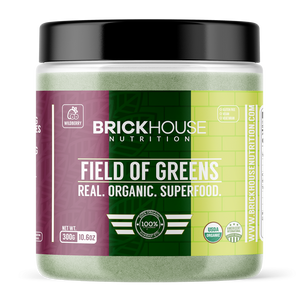
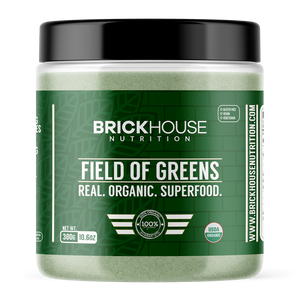
Field of Greens is a whole-food greens powder that helps bridge the gap. Each scoop delivers fruits, vegetables, and antioxidants in a bioavailable form your body can actually use.
It supports immune function—critical when sleep deprivation is already taxing your defenses—and provides steady micronutrient support without requiring refrigeration or prep time. Mix it with water and drink it during your shift. It's not a replacement for real food, but it's reliable insurance when real food isn't realistic.
Here's an uncomfortable truth for night shift workers: you're almost certainly vitamin D deficient. You're sleeping when the sun is out and working when it's dark. Even on days off, you may not get enough sun exposure to maintain adequate levels.
But don’t feel too bad, even many daylight goers are vitamin D deficient!
Vitamin D deficiency is linked to fatigue, weakened immunity, impaired mood, reduced muscle function, and poor recovery from training. For shift workers, supplementation isn't optional—it's essential.
Most people benefit from 2,000–5,000 IU daily, though your optimal dose depends on your baseline levels. Consider getting tested to dial in your specific needs. Take vitamin D with a meal containing fat to enhance absorption.
Magnesium is involved in over 300 enzymatic reactions in the body, including those governing sleep quality, muscle relaxation, stress response, and blood sugar regulation—all areas where shift workers struggle. Yet most people don't get enough from diet alone, and stress depletes magnesium further.
Supplementing with 200–400mg of magnesium in the evening (relative to your sleep schedule) can improve sleep onset, reduce muscle tension, and support recovery after physically demanding shifts. Forms matter: magnesium glycinate and magnesium threonate are preferred for their calming effects and superior absorption compared to cheaper forms like magnesium oxide.
Shift work is hard on the body. There's no sugarcoating that. But you're not a broken version of a day-shift person—you're someone who needs different tools, not excuses.
The strategies in this guide won't eliminate circadian disruption, but they can minimize its impact and help you build a body that's resilient despite the challenges. Start with one change from each section. Nail your anchor meal. Set a caffeine cutoff. Optimize your sleep environment. Add the supplements that address your biggest gaps.
Small, consistent adjustments compound over time. You don't need a perfect plan—you need a sustainable one. Your schedule may fight your biology, but with the right strategies, you can still win.
Kecklund, G., & Axelsson, J. (2016). Health consequences of shift work and insufficient sleep. BMJ, 355, i5210. https://doi.org/10.1136/bmj.i5210
Potter, G. D., Skene, D. J., Arendt, J., Cade, J. E., Grant, P. J., & Hardie, L. J. (2016). Circadian rhythm and sleep disruption: Causes, metabolic consequences, and countermeasures. Endocrine Reviews, 37(6), 584–608. https://doi.org/10.1210/er.2016-1083
Boivin, D. B., & Boudreau, P. (2014). Impacts of shift work on sleep and circadian rhythms. Pathologie Biologie, 62(5), 292–301. https://doi.org/10.1016/j.patbio.2014.08.001
Costello, R. B., Lentino, C. V., Boyd, C. C., O'Connell, M. L., Crawford, C. C., Sprber, M. L., & Deuster, P. A. (2014). The effectiveness of melatonin for promoting healthy sleep: A rapid evidence assessment of the literature. Nutrition Journal, 13, 106. https://doi.org/10.1186/1475-2891-13-106
de Baaij, J. H., Hoenderop, J. G., & Bindels, R. J. (2015). Magnesium in man: Implications for health and disease. Physiological Reviews, 95(1), 1–46. https://doi.org/10.1152/physrev.00012.2014
Cycle-Synced Training: Smart performance edge or just pink‑washed period science?
One week, you’re unstoppable. The bar moves fast, the weights feel light, you’re hitting personal records you’ve been chasing for months. You walk out of the gym like you could take on the world. S...
Read more about Cycle-Synced Training: Smart performance edge or just pink‑washed period science?When Never Enough Becomes a Prison: Understanding Body Dysmorphia in Fit and Active People
You’ve seen this person at the gym. Maybe you are this person. They’re strong, lean, and disciplined. Other people quietly think, “I’d kill to look like that.” Yet when they catch their reflection ...
Read more about When Never Enough Becomes a Prison: Understanding Body Dysmorphia in Fit and Active People
© 2026 BrickHouse Nutrition, llc. All rights reserved.